Liver
The liver is the main organ that processes medicines, so it is often under strain during leukaemia treatment. This topic explains which liver effects can remain after treatment and how to protect it.

01Short answer
02Simple explanation
Liver tests often return to normal after treatment.
Risks: iron overload, medicines, GVHD, hepatitis.
Checks: ALT, AST, bilirubin, ferritin.
The liver can regenerate.
Limit alcohol and supplements.
03Scientific explanation
Iron overload: each red cell transfusion brings about 200–250 mg of iron; after many transfusions ferritin rises and iron collects in the liver (MedlinePlus).
Medicines: the COG recommends liver tests after methotrexate, mercaptopurine and thioguanine; thioguanine rarely affects the liver’s blood vessels.
Hepatitis: people transfused before 1992 (later in some countries) are advised to have hepatitis C screening (COG).
Fatty liver: steroids, excess weight and insulin resistance raise the risk of metabolic fatty liver disease (NIDDK).
04What happens in the body?
What does the liver do?
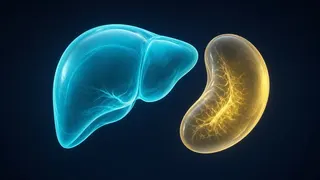
It processes medicines and toxins, makes proteins and clotting factors, stores energy and produces bile.
Iron overload
After many transfusions extra iron collects in the liver and other organs. A ferritin test shows this. When needed, your doctor prescribes treatment (venesection or chelation).

Hepatitis
Hepatitis B and C can silently damage the liver over years. Screening and the hepatitis B vaccine matter; modern treatment can cure hepatitis C.
Liver recovery
Liver cells can renew. Once the cause is removed, tests often return to normal.

How to protect your liver
Limit alcohol, keep a healthy weight, stay active, agree herbal products and supplements with your doctor and have the hepatitis B vaccine.
When to call your doctor
Worrying signs — fever, bleeding, new pain, breathlessness — should be reported to your doctor between visits too. Getting in touch early is always better than waiting.
05Protecting the liver
Steps of liver follow-up.




06Liver risk and checks (simplified)
| Factor | Possible effect | Check |
|---|---|---|
| Many transfusions | Iron overload | Ferritin |
| Methotrexate, mercaptopurine | Changed liver tests | ALT, AST, bilirubin |
| Allogeneic transplant | Liver GVHD | Liver tests |
| Transfusions long ago | Hepatitis B, C | Hepatitis tests |
| Steroids, excess weight | Fatty liver | Tests, ultrasound |
* Your doctor sets the testing schedule.
07Key terms
- ALT, AST
- Liver cell enzymes.
- Bilirubin
- A bile pigment.
- Ferritin
- A protein that reflects iron stores.
- Iron overload
- Extra iron collecting in organs.
- Chelation
- Treatment that removes extra iron.
- Hepatitis
- Inflammation of the liver.
08Key points
- Tests often return to normal.
- Get checked for iron overload.
- Have hepatitis screening.
- Limit alcohol.
- Agree supplements with your doctor.
- The liver recovers.
09Frequently asked questions
My ferritin is high. What does that mean?
It may be iron overload after transfusions or inflammation; your doctor looks for the cause.
Can I drink alcohol?
Even with normal tests, keeping alcohol to a minimum is advised; discuss it with your doctor.
Do I need the hepatitis B vaccine?
Often yes, especially after a transplant; your doctor sets the schedule.
Are liver problems reversible?
Often yes, once the cause is removed.
Does this information replace medical advice?
No. This is general education; only your treating doctor can assess your situation.
10Questions for your doctor
Take these questions to your appointment. The ones you save are collected on the “My questions” page and stay on this device only.
My ferritin is high. What does that mean?
Can I drink alcohol?
Do I need the hepatitis B vaccine?
Are liver problems reversible?
Does this information replace medical advice?
12Sources
- Children's Oncology Group. Long-Term Follow-Up Guidelines for Survivors of Childhood, Adolescent and Young Adult Cancers
- National Cancer Institute (NCI). Late Effects of Treatment for Childhood Cancer (PDQ®)–Patient Version
- MedlinePlus (U.S. National Library of Medicine). Liver Function Tests
- MedlinePlus (U.S. National Library of Medicine). Ferritin Blood Test
- MedlinePlus (U.S. National Library of Medicine). Hepatitis
- National Institute of Diabetes and Digestive and Kidney Diseases (NIDDK). Metabolic Dysfunction-associated Steatotic Liver Disease (MASLD)
- National Cancer Institute (NCI). Follow-Up Medical Care
- National Cancer Institute (NCI). Cancer Survivorship
- Cancer.Net (ASCO). Follow-Up Care After Cancer Treatment
- Leukemia & Lymphoma Society (LLS). Long-Term and Late Effects of Treatment