What to bring to a doctor abroad
A well-prepared pack for a consultation abroad saves time, money and repeat tests.

01Short answer
02Simple explanation
A summary, translated.
Reports: pathology, genetics, MRD.
Discs and slides if needed.
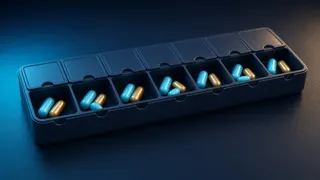
Medicines in original packaging.
Everything in hand luggage.
03Scientific explanation
Slide review: many centres confirm the diagnosis with their own pathologists.
Format: images are usually accepted in DICOM format on a disc or by secure link.
Medicine rules: some countries require special permission to bring certain medicines; check with the embassy.
04What happens in the body?
Medical pouch
Documents, medicines and, if needed, a cool pack in a separate bag.
Slides and disc
Pathology material is sent between hospitals.

Translation
Keep the original and the translation together.

Question list
Write down what you want to ask at the consultation.
05Your travel pack
Four steps.





06Key points at a glance
| Topic | In brief |
|---|---|
 Medical pouch | Documents, medicines and, if needed, a cool pack in a separate bag. |
 Slides and disc | Pathology material is sent between hospitals. |
 Translation | Keep the original and the translation together. |
 Question list | Write down what you want to ask at the consultation. |
07Key terms
- Medical summary
- A short description of illness and treatment.
- Pathology block
- A paraffin block holding a tissue sample.
- DICOM
- The file format for scans.
- Official translation
- A certified translation.
- Prescription copy
- A document showing the medicine was prescribed.
08Key points
- Ask the centre for a list.
- Have the summary translated.
- Arrange for slides to be sent.
- Carry medicines in original packaging.
- Keep everything in hand luggage.
09Frequently asked questions
Should I translate every document?
Usually the summary and key reports are enough; ask the centre.
Can I carry the slides myself?
Sometimes, but they are often sent by courier between hospitals.
Can medicines cause problems at customs?
Some can; bring a prescription copy and a doctor’s letter.
Does this information replace medical advice?
No. This is general education; only your treating doctor can assess your situation.
10Questions for your doctor
Take these questions to your appointment. The ones you save are collected on the “My questions” page and stay on this device only.
Should I translate every document?
Can I carry the slides myself?
Can medicines cause problems at customs?
Does this information replace medical advice?
12Sources
- Centers for Disease Control and Prevention (CDC). Medical Tourism: Getting Medical Care in Another Country
- MedlinePlus (U.S. National Library of Medicine). Personal Health Records
- National Cancer Institute (NCI). Questions to Ask Your Doctor about Treatment
- National Cancer Institute (NCI). Follow-Up Medical Care
- Cancer.Net (ASCO). Follow-Up Care After Cancer Treatment
- National Cancer Institute (NCI). Cancer Survivorship
- MedlinePlus (U.S. National Library of Medicine). Hyperthyroidism
- American Thyroid Association. Thyroid Nodules
- National Institute of Neurological Disorders and Stroke. Peripheral Neuropathy
- MedlinePlus (U.S. National Library of Medicine). Seizures