My diagnosis and subtype
The exact name and subtype of leukaemia determine treatment, follow-up and future risks. It is important to know it precisely and write it down.

01Short answer
02Simple explanation
Four main types: ALL, AML, CML, CLL.
Each has subtypes.
The subtype comes from immunophenotype and genetics.
Copy the exact name from the report.
Ask your doctor what it means.
03Scientific explanation
Classification: the WHO 5th edition and ICC 2022 divide leukaemias more precisely by genetic features.
Risk group: in AML, the ELN risk classification is based on genetics.
It can change: new genetic changes can appear at relapse; keep old and new results separately.
04What happens in the body?
Type and subtype
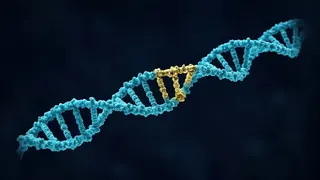
“AML” is the general name; “AML with NPM1 mutation” is a precise subtype.
Cell markers
Flow cytometry shows the markers on the cell surface.

The report
The exact name is written in the pathology or haematopathology report.

Why it matters
The subtype decides treatment, the transplant decision and follow-up tests.
05Recording your diagnosis
Four steps.





06Key points at a glance
| Topic | In brief |
|---|---|
 Type and subtype | “AML” is the general name; “AML with NPM1 mutation” is a precise subtype. |
 Cell markers | Flow cytometry shows the markers on the cell surface. |
| The report | The exact name is written in the pathology or haematopathology report. |
 Why it matters | The subtype decides treatment, the transplant decision and follow-up tests. |
07Key terms
- Subtype
- A more precise form of leukaemia.
- Immunophenotype
- Markers on the cell surface.
- Karyotype
- How the chromosomes look.
- Risk group
- A group based on the expected course.
- WHO/ICC
- International classifications.
08Key points
- Get a copy of the report.
- Copy the exact name.
- Add your genetic results.
- Ask about your risk group.
- At relapse, record new results separately.
09Frequently asked questions
Can my diagnosis be written differently in other countries?
Yes, classifications can differ, so keep the original report.
Does the subtype matter?
Yes, treatment and follow-up depend on it.
I do not understand the report.
Ask your doctor to explain it in plain language.
Does this information replace medical advice?
No. This is general education; only your treating doctor can assess your situation.
10Questions for your doctor
Take these questions to your appointment. The ones you save are collected on the “My questions” page and stay on this device only.
Can my diagnosis be written differently in other countries?
Does the subtype matter?
I do not understand the report.
Does this information replace medical advice?
12Sources
- National Cancer Institute (NCI). Adult Acute Myeloid Leukemia Treatment (PDQ®)–Patient Version
- National Cancer Institute (NCI). Adult Acute Lymphoblastic Leukemia Treatment (PDQ®)–Patient Version
- MedlinePlus (U.S. National Library of Medicine). Genetic Testing
- National Cancer Institute (NCI). Follow-Up Medical Care
- Cancer.Net (ASCO). Follow-Up Care After Cancer Treatment
- National Cancer Institute (NCI). Cancer Survivorship
- National Cancer Institute (NCI). NCI Dictionary of Cancer Terms: disease-free survival
- MedlinePlus (U.S. National Library of Medicine). Thyroid Tests
- Leukemia & Lymphoma Society (LLS). Minimal Residual Disease (MRD) — overview
- MedlinePlus (U.S. National Library of Medicine). Karyotype Genetic Test