Türkiye: Diagnostics
An accurate diagnosis is the basis of the right treatment. This chapter explains which tests are used to diagnose leukaemia in Türkiye.

01Short answer
02Simple explanation
Blood test: the first step.
Bone marrow: confirms the diagnosis.
Genetics: risk and treatment choice.
03Scientific explanation
Tests: according to the ACS, AML is diagnosed with blood counts, bone marrow aspiration and biopsy, flow cytometry, cytogenetics and molecular tests.
Flow cytometry: according to MedlinePlus, this test measures markers on the cell surface to identify the type of leukaemia.
04What happens in the body?
Bone marrow test
Usually taken from the hip bone under local anaesthetic. It is short; mild soreness may last a few days.
Laboratory tests
Flow cytometry shows the cell type, cytogenetics shows chromosome changes, and molecular tests show gene mutations.

Explaining the results
The doctor explains the type, risk group and treatment plan. Results take from a few days to two or three weeks.

05Diagnosis in four steps
From blood to genetics.



06Key points at a glance
| Topic | In brief |
|---|---|
 Bone marrow test | Usually taken from the hip bone under local anaesthetic. It is short; mild soreness may last a few days. |
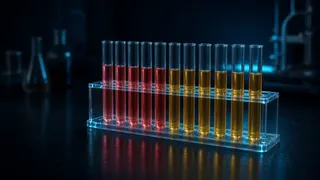 Laboratory tests | Flow cytometry shows the cell type, cytogenetics shows chromosome changes, and molecular tests show gene mutations. |
 Explaining the results | The doctor explains the type, risk group and treatment plan. Results take from a few days to two or three weeks. |
07Key terms
- Kemik iliği aspirasyonu
- Bone marrow aspiration.
- Akım sitometri
- Flow cytometry.
- Sitogenetik
- Chromosome analysis.
- Moleküler test
- Gene mutation test.
08Key points
- Blood test first.
- Bone marrow confirms.
- Genetics shows risk.
- Keep copies of results.
- Write questions down.
09Frequently asked questions
Is a bone marrow test painful?
Local anaesthetic is used; brief pressure and pain are possible.
When will results be ready?
Some within days; genetic tests take longer.
Are tests done abroad accepted?
Often yes, but the centre may repeat some.
10Questions for your doctor
Take these questions to your appointment. The ones you save are collected on the “My questions” page and stay on this device only.
Is a bone marrow test painful?
When will results be ready?
Are tests done abroad accepted?
12Sources
- American Cancer Society. Tests for Acute Myeloid Leukemia (AML)
- MedlinePlus (U.S. National Library of Medicine). Bone marrow aspiration
- MedlinePlus (U.S. National Library of Medicine). Flow cytometry
- National Cancer Institute (NCI). Adult Acute Myeloid Leukemia Treatment (PDQ®) – Patient Version
- Ministry of Health of Türkiye. e-Nabız personal health record
- KWF Kankerbestrijding. Official website (in Dutch)
- GOV.UK (FCDO). Netherlands travel advice: getting help
- International Agency for Research on Cancer (IARC/WHO). Global Cancer Observatory: United Kingdom fact sheet
- American Cancer Society. Leukemia
- Cancer.Net (ASCO). Seeking a Second Opinion