Azerbaijan: the cuisine
Azerbaijani cuisine is rich: plov, dolma, soups, kebabs, fresh herbs, rice, bread and tea. Much of it can stay safe during treatment if you follow a few rules. This chapter looks at the cuisine through a food-safety lens.

01Short answer
02Simple explanation
Slow-cooked hot dishes (plov, soup, bozbash) are usually safe.
Raw and undercooked foods are risky during neutropenia.
Herbs must be washed very well; village cheese and market milk are not pasteurised.
03Scientific explanation
WHO five keys: keep clean, separate raw and cooked, cook thoroughly, keep food at safe temperatures, use safe water and raw materials.
During cancer treatment: FoodSafety.gov advises people with weakened immunity to avoid raw and undercooked meat, raw eggs, and unpasteurised milk and cheese.
04What happens in the body?
What works well
Freshly cooked plov, soups, bozbash, piti, dolma, boiled or stewed vegetables, cooked pulses and fresh bread. Serve food hot and refrigerate leftovers quickly.

What to watch
Undercooked kebab and lyulya, dishes with raw egg, homemade motal and white cheese, market milk and raw herb salads are usually not recommended during neutropenia.
Herbs
Herbs are an essential part of the Azerbaijani table. During neutropenia it is safer either to wash them very thoroughly (each leaf under running water) or to add them to hot dishes — ask your team.

05A safe table in four steps
From choosing to serving.





06Key points at a glance
| Topic | In brief |
|---|---|
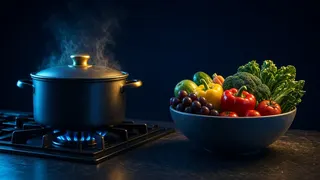 What works well | Freshly cooked plov, soups, bozbash, piti, dolma, boiled or stewed vegetables, cooked pulses and fresh bread. Serve food hot and refrigerate leftovers quickly. |
 What to watch | Undercooked kebab and lyulya, dishes with raw egg, homemade motal and white cheese, market milk and raw herb salads are usually not recommended during neutropenia. |
 Herbs | Herbs are an essential part of the Azerbaijani table. During neutropenia it is safer either to wash them very thoroughly (each leaf under running water) or to add them to hot dishes — ask your team. |
07Key terms
- Neutropenia
- Low neutrophils.
- Pasteurisation
- Heating milk to kill germs.
- Cross-contamination
- Germs passing from raw to cooked food.
- Dovga
- A hot soup of qatiq (yoghurt) and herbs.
08Key points
- Prefer slow-cooked hot dishes.
- Avoid undercooked meat.
- Wash herbs very well.
- Pasteurised dairy only.
- Your team sets personal rules.
09Frequently asked questions
Can I eat plov?
Freshly cooked hot plov is usually safe. Cool leftovers quickly and reheat once, thoroughly.
Is dovga okay?
Dovga made with pasteurised qatiq and brought to the boil is usually fine.
What about pickles?
Ask your team about homemade pickles; sealed commercially produced products are usually safer.
10Questions for your doctor
Take these questions to your appointment. The ones you save are collected on the “My questions” page and stay on this device only.
Can I eat plov?
Is dovga okay?
What about pickles?
12Sources
- FoodSafety.gov (U.S.). Food Safety for People with Cancer
- World Health Organization (WHO). Five keys to safer food
- National Cancer Institute (NCI). Infection and Neutropenia during Cancer Treatment
- Cancer Research UK. Leukaemia
- Blood Cancer UK. Official website
- NHS. GP services
- NICE (National Institute for Health and Care Excellence). Official website
- GOV.UK. Medicines and Healthcare products Regulatory Agency
- GOV.UK. Cancer Drugs Fund
- National Cancer Institute (NCI). Leukemia — Patient Version