Azerbaijan: local dishes
This chapter looks at familiar Azerbaijani dishes from a food-safety point of view during treatment: which usually work and which need care. The site’s “Dishes” section has a separate page for each dish.

01Short answer
02Simple explanation
Soups and slow-cooked dishes are the safest choice.
Kebabs only when fully cooked.
Village dairy is usually a no during neutropenia.
03Scientific explanation
Temperature: according to FoodSafety.gov, poultry should reach 74 °C and mince 71 °C; without a thermometer, there should be no pink inside and juices should run clear.
Storage: the WHO advises not leaving cooked food at room temperature for more than 2 hours and reheating it thoroughly.
04What happens in the body?
Usually fine
Plov, piti, bozbash, kufta-bozbash, dushbara, dolma, vegetable stews, dovga made with pasteurised qatiq, hot qutab and fresh tandoor bread.
With care
Kebab, lyulya and tika must be fully cooked. Kuku and egg dishes must be fully set. Pakhlava, shekerbura and other baked pastries are usually fine; cream desserts are risky.

Usually not recommended
Motal, village cheese, market milk, homemade clotted cream (qaymaq), undercooked meat, salads of poorly washed raw herbs and street food left standing for long.

05Making a home dish safe
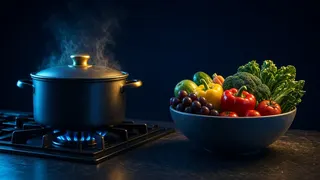
From pot to fridge.




06Key points at a glance
| Topic | In brief |
|---|---|
 Usually fine | Plov, piti, bozbash, kufta-bozbash, dushbara, dolma, vegetable stews, dovga made with pasteurised qatiq, hot qutab and fresh tandoor bread. |
| With care | Kebab, lyulya and tika must be fully cooked. Kuku and egg dishes must be fully set. Pakhlava, shekerbura and other baked pastries are usually fine; cream desserts are risky. |
 Usually not recommended | Motal, village cheese, market milk, homemade clotted cream (qaymaq), undercooked meat, salads of poorly washed raw herbs and street food left standing for long. |
07Key terms
- Piti
- A lamb and chickpea soup cooked in a clay pot.
- Motal
- A village cheese matured in a skin.
- Qutab
- A thin filled flatbread cooked on a saj.
- Kuku
- A herb and egg dish.
08Key points
- Soups and stews are safest.
- Kebab only when fully cooked.
- Avoid village dairy.
- Cool leftovers quickly.
- See each dish’s own page.
09Frequently asked questions
What can I eat at a wedding or as a guest?
Choose freshly cooked hot dishes; avoid cold starters that have stood uncovered for a long time.
Is qutab okay?
Fresh hot qutab is usually fine.
Is pakhlava okay?
Baked pastries are usually fine; talk to your doctor about blood sugar.
10Questions for your doctor
Take these questions to your appointment. The ones you save are collected on the “My questions” page and stay on this device only.
What can I eat at a wedding or as a guest?
Is qutab okay?
Is pakhlava okay?
12Sources
- FoodSafety.gov (U.S.). Food Safety for People with Cancer
- World Health Organization (WHO). Five keys to safer food
- National Cancer Institute (NCI). Infection and Neutropenia during Cancer Treatment
- NHS Blood and Transplant. Give blood
- NHS. Blood transfusion
- Anthony Nolan. Official website
- World Marrow Donor Association (WMDA). Official website
- EBMT. European Society for Blood and Marrow Transplantation
- EBMT / JACIE. JACIE accreditation
- National Cancer Institute (NCI). Leukemia — Patient Version