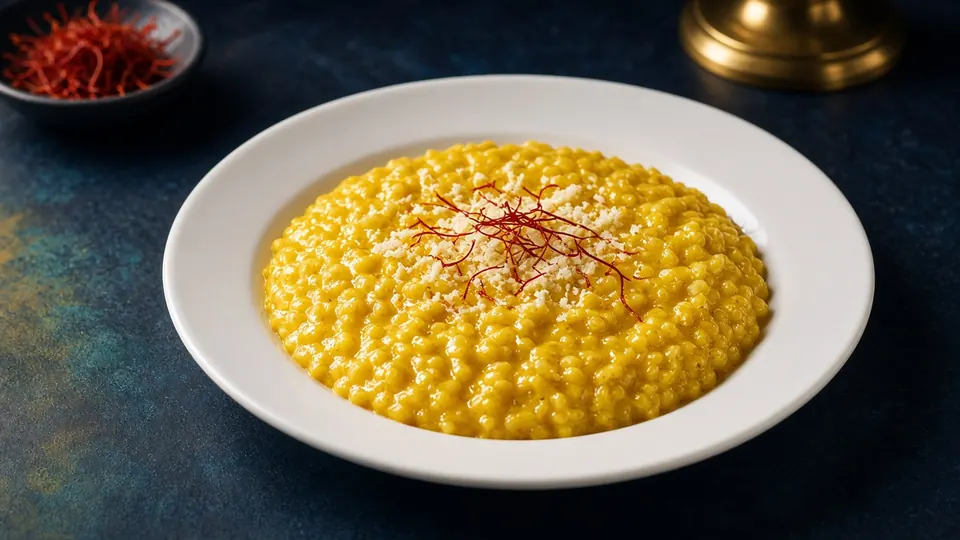
Risotto alla milanese
Creamy saffron rice finished with butter and Parmesan.
Well-cooked hot dish
Ingredients
- arborio rice
- stock
- onion
- white wine
- saffron
- butter
- Parmesan
- salt
How it is prepared
The rice is toasted, then stock is added ladle by ladle while stirring; butter and cheese go in at the end.
Food safety with low immunity
- Cool cooked rice within an hour, refrigerate it and eat it within 24 hours: bacteria that make toxins can multiply in rice left at room temperature.
- Use only pasteurised milk, yoghurt, cream and cheese.
How to prepare it during treatment
It can be made without wine.
Your diet during treatment is agreed with your doctor. Sample 7-day menu for the treatment period →
Storage
Cool rice dishes within 1 hour, refrigerate and eat within 24 hours. Do not keep them at room temperature.
Reheating
Only once, until steaming hot. Never reheat rice a second time.
Symptoms it may suit
- Nausea. Mild and not too greasy; can be eaten in small portions, warm or at room temperature.
- Mouth sores. Soft and moist; easier to eat without spicy or sour additions.
- Diarrhoea. In a low-fat, gentle version it may be better tolerated with diarrhoea.
- Low appetite. Gives a lot of energy and protein in a small portion — can help when appetite is low.
These are general observations: what suits you can change from day to day.
Treatment phases
- Before treatmentmay suit
- During a coursemay suit
- Low counts (neutropenia)Freshly cooked and hotmay suit
- Between coursesmay suit
- After treatmentmay suit
Phase notes are general. During low counts, follow only your care team’s food rules.
If you have other conditions
- Diabetes. Rich in carbohydrates (rice, potato, dough). With diabetes, discuss portion size and blood sugar with your team.
- Stomach and gut. Contains dairy. With lactose intolerance or bowel problems, discuss suitability with your team.
- High blood pressure, Heart disease, Kidney disease. Often salty (stock, salty cheese, sausage, pickles). With high blood pressure, heart or kidney disease, discuss salt limits with your team.
- Liver disease. The recipe uses wine or other alcohol, and not all of it cooks off. With liver disease and during treatment, discuss it with your team.
Nutrition (per 100 g)
Nutrition figures from a reliable source have not been added for this dish yet.
More from this cuisine
Related topics
Food safetyNeutropenic diet (low-microbial diet)PasteurisedCore cooking temperatureLeftoversCross-contamination
Sources
- Centers for Disease Control and Prevention (CDC). Safer Food Choices for People With Weakened Immune Systems
- FoodSafety.gov (U.S. HHS). Cook to a Safe Minimum Internal Temperature
- USDA Food Safety and Inspection Service. Leftovers and Food Safety
- U.S. Food and Drug Administration (FDA). Food Safety for Older Adults and People with Cancer, Diabetes, HIV/AIDS, Organ Transplants, and Autoimmune Diseases
- Food Standards Agency (UK). Chilling
- World Health Organization (WHO). Five keys to safer food manual
- Memorial Sloan Kettering Cancer Center. Food Safety During Cancer Treatment
- National Cancer Institute (NCI). Eating Hints: Before, during, and after Cancer Treatment
- BMJ Supportive & Palliative Care, 2019. Neutropenic diets to prevent cancer infections: updated systematic review and meta-analysis
- U.S. Department of Agriculture (USDA). FoodData Central — Food and Nutrient Database for Dietary Studies (FNDDS)