Kabab koobideh
Skewered minced lamb or beef, served with saffron rice (chelow) and grilled tomatoes.
Well-cooked hot dish
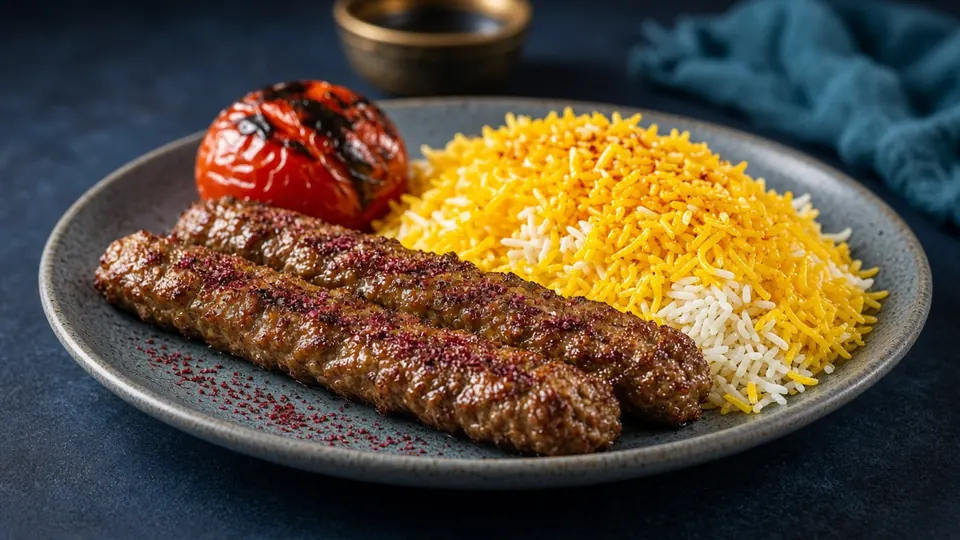
Ingredients
- minced lamb or beef
- onion
- salt
- pepper
- sumac
- rice
- saffron
- butter
- tomatoes
How it is prepared
The mince is pressed onto wide skewers and grilled until cooked through.
Food safety with low immunity
- Minced meat and dishes made from it must always be fully cooked — including the middle.
- Cool cooked rice within an hour, refrigerate it and eat it within 24 hours: bacteria that make toxins can multiply in rice left at room temperature.
- Instead of street food or dishes that have stood on a buffet for a long time, choose a freshly cooked hot portion.
Your diet during treatment is agreed with your doctor. Sample 7-day menu for the treatment period →
Storage
Refrigerate grilled meat within 2 hours and eat within 1–2 days. Keep raw and cooked meat in separate containers.
Reheating
In a pan, oven or microwave until the centre is steaming hot, not just warm.
Symptoms it may suit
- Low appetite. Gives a lot of energy and protein in a small portion — can help when appetite is low.
- Weight loss. Energy-dense and easy to enrich (oil, cheese, yoghurt) — can help with weight loss.
These are general observations: what suits you can change from day to day.
Treatment phases
- Before treatmentmay suit
- During a coursemay suit
- Low counts (neutropenia)Freshly cooked and hotmay suit
- Between coursesmay suit
- After treatmentmay suit
Phase notes are general. During low counts, follow only your care team’s food rules.
If you have other conditions
- Heart disease, Obesity, Liver disease, Stomach and gut. Can be fatty. With heart, liver or digestive disease, or excess weight, discuss fat content and portions with your team.
- High blood pressure, Heart disease, Kidney disease. Often salty (stock, salty cheese, sausage, pickles). With high blood pressure, heart or kidney disease, discuss salt limits with your team.
- Diabetes. Rich in carbohydrates (rice, potato, dough). With diabetes, discuss portion size and blood sugar with your team.
- Arthritis, Kidney disease. Red meat, offal or seafood can be rich in purines. With gout and some kidney conditions, discuss it with your team.
Nutrition (per 100 g)
Nutrition figures from a reliable source have not been added for this dish yet.
More from this cuisine
Related topics
Food safetyNeutropenic diet (low-microbial diet)PasteurisedCore cooking temperatureLeftoversCross-contamination
Sources
- Centers for Disease Control and Prevention (CDC). Safer Food Choices for People With Weakened Immune Systems
- FoodSafety.gov (U.S. HHS). Cook to a Safe Minimum Internal Temperature
- USDA Food Safety and Inspection Service. Leftovers and Food Safety
- U.S. Food and Drug Administration (FDA). Food Safety for Older Adults and People with Cancer, Diabetes, HIV/AIDS, Organ Transplants, and Autoimmune Diseases
- Food Standards Agency (UK). Chilling
- World Health Organization (WHO). Five keys to safer food manual
- Memorial Sloan Kettering Cancer Center. Food Safety During Cancer Treatment
- National Cancer Institute (NCI). Eating Hints: Before, during, and after Cancer Treatment
- BMJ Supportive & Palliative Care, 2019. Neutropenic diets to prevent cancer infections: updated systematic review and meta-analysis
- U.S. Department of Agriculture (USDA). FoodData Central — Food and Nutrient Database for Dietary Studies (FNDDS)