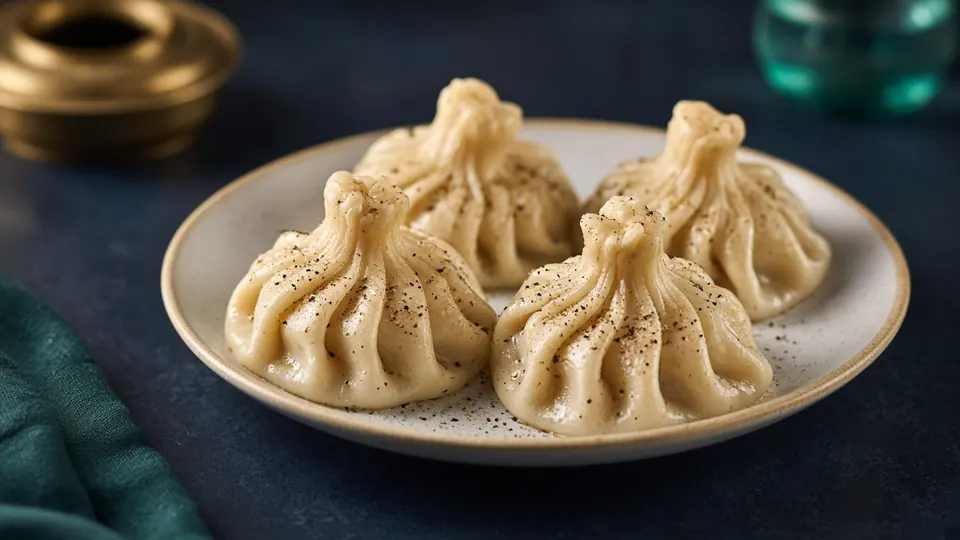
Khinkali (soup dumplings)
Large dumplings filled with spiced minced meat and hot broth.
Well-cooked hot dish
Ingredients
- flour
- water
- minced beef and pork
- onion
- coriander
- pepper
- cumin
- salt
How it is prepared
Khinkali are pleated into pouches and boiled for several minutes after they float.
Food safety with low immunity
- Minced meat and dishes made from it must always be fully cooked — including the middle.
- When there are lots of herbs, wash them well and cook them in the dish; during neutropenia it is wise to skip a raw herb garnish.
How to prepare it during treatment
The broth inside is very hot — eat with care.
Your diet during treatment is agreed with your doctor. Sample 7-day menu for the treatment period →
Storage
Keep raw dumplings frozen and cook them from frozen. Refrigerate cooked leftovers and eat them within a day.
Reheating
Return to boiling water or steam until hot right through.
Symptoms it may suit
- Low appetite. Gives a lot of energy and protein in a small portion — can help when appetite is low.
- Weight loss. Energy-dense and easy to enrich (oil, cheese, yoghurt) — can help with weight loss.
These are general observations: what suits you can change from day to day.
Treatment phases
- Before treatmentmay suit
- During a coursemay suit
- Low counts (neutropenia)Freshly cooked and hotmay suit
- Between coursesmay suit
- After treatmentmay suit
Phase notes are general. During low counts, follow only your care team’s food rules.
If you have other conditions
- Autoimmune disease, Stomach and gut. Contains wheat (gluten). With coeliac disease and some autoimmune conditions, discuss it with your team.
- Heart disease, Obesity, Liver disease, Stomach and gut. Can be fatty. With heart, liver or digestive disease, or excess weight, discuss fat content and portions with your team.
- High blood pressure, Heart disease, Kidney disease. Often salty (stock, salty cheese, sausage, pickles). With high blood pressure, heart or kidney disease, discuss salt limits with your team.
- Stomach and gut. Can be spicy. With digestive problems or mouth sores, choose a milder version.
Nutrition (per 100 g)
Nutrition figures from a reliable source have not been added for this dish yet.
More from this cuisine
Related topics
Food safetyNeutropenic diet (low-microbial diet)PasteurisedCore cooking temperatureLeftoversCross-contamination
Sources
- Centers for Disease Control and Prevention (CDC). Safer Food Choices for People With Weakened Immune Systems
- FoodSafety.gov (U.S. HHS). Cook to a Safe Minimum Internal Temperature
- USDA Food Safety and Inspection Service. Leftovers and Food Safety
- U.S. Food and Drug Administration (FDA). Food Safety for Older Adults and People with Cancer, Diabetes, HIV/AIDS, Organ Transplants, and Autoimmune Diseases
- Food Standards Agency (UK). Chilling
- World Health Organization (WHO). Five keys to safer food manual
- Memorial Sloan Kettering Cancer Center. Food Safety During Cancer Treatment
- National Cancer Institute (NCI). Eating Hints: Before, during, and after Cancer Treatment
- BMJ Supportive & Palliative Care, 2019. Neutropenic diets to prevent cancer infections: updated systematic review and meta-analysis
- U.S. Department of Agriculture (USDA). FoodData Central — Food and Nutrient Database for Dietary Studies (FNDDS)