Azerbaijan: access to medicines
In leukaemia treatment, medicines are used both in hospital and at home. This chapter explains how leukaemia medicines are usually provided in Azerbaijan and what to watch out for.

01Short answer
02Simple explanation
Chemotherapy in hospital is usually provided by the hospital itself.
Some medicines taken at home may be supplied through state programmes.
Buy medicines only from official pharmacies, in original packaging.
03Scientific explanation
Outpatient medicines: according to the WHO European Observatory on Health Systems and Policies, outpatient medicines in Azerbaijan are provided mainly through targeted state programmes.
Essential medicines list: the WHO Model List of Essential Medicines includes several chemotherapy drugs used for leukaemia and targeted drugs such as imatinib; countries base their own lists on it.
04What happens in the body?
In hospital
During induction and consolidation, drugs are prepared on the ward and given intravenously. You can ask the ward where each drug is supplied from.
At home
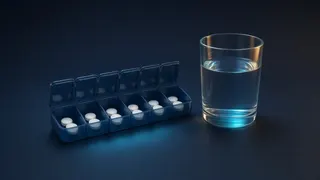
In chronic leukaemia (for example CML), targeted drugs are taken daily for a long time. They may be supplied through a state programme or another route — your doctor will explain how.

Safety
Counterfeit or badly stored medicine is dangerous. Check the packaging is intact, the expiry date and storage conditions. If you bring medicine from abroad, you need a doctor’s letter and a prescription.

05The road to your medicine
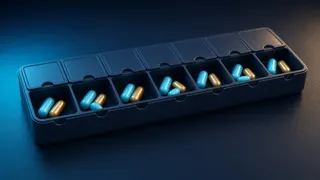
From prescription to daily use.




06Key points at a glance
| Topic | In brief |
|---|---|
 In hospital | During induction and consolidation, drugs are prepared on the ward and given intravenously. You can ask the ward where each drug is supplied from. |
| At home | In chronic leukaemia (for example CML), targeted drugs are taken daily for a long time. They may be supplied through a state programme or another route — your doctor will explain how. |
| Safety | Counterfeit or badly stored medicine is dangerous. Check the packaging is intact, the expiry date and storage conditions. If you bring medicine from abroad, you need a doctor’s letter and a prescription. |
07Key terms
- Outpatient medicine
- A medicine taken at home.
- Targeted drug
- A drug aimed at a specific molecule in leukaemia cells.
- State programme
- A programme supplying medicines for certain diseases.
- Interaction
- One medicine changing the effect of another.
08Key points
- The hospital supplies inpatient drugs.
- Outpatient drugs often via state programmes.
- Official pharmacies only.
- Never change the dose yourself.
- Tell your team early if a medicine is running out.
09Frequently asked questions
The medicine is not in pharmacies?
Tell your doctor at once; they will decide what to do or what to use instead.
Does a generic work the same way?
Registered generics contain the same active substance. Discuss any switch with your doctor.
Can I bring medicine from abroad?
Only with your doctor’s agreement, a prescription and documents, and in line with customs rules.
10Questions for your doctor
Take these questions to your appointment. The ones you save are collected on the “My questions” page and stay on this device only.
The medicine is not in pharmacies?
Does a generic work the same way?
Can I bring medicine from abroad?
12Sources
- European Observatory on Health Systems and Policies (WHO). Azerbaijan: health system information and resources
- World Health Organization (WHO). WHO Model Lists of Essential Medicines
- National Cancer Institute (NCI). Drugs Approved for Leukemia
- Centers for Disease Control and Prevention (CDC). Medical Tourism: Getting Medical Care in Another Country
- State haematology centre (Baku). Official website (in Azerbaijani)
- PubMed. Hematopoietic cell transplantation in Uzbekistan: first experience (PMID 26809683)
- AzerNews. Uzbekistan starts allogeneic bone marrow transplantation, 2024
- Darakchi.uz. Allogeneic and haploidentical transplants at the Center of Hematology, 2025
- UZ24. First allogeneic bone marrow transplants in children in Uzbekistan, 2024 (in Russian)
- Minsk Scientific and Practical Center for Surgery, Transplantology and Hematology. Hematology