A day at a glance: a simple daily rhythm
During treatment the day is often divided between medicines, food, rest and movement. A simple daily "map" helps you remember everything and save energy. This section is an example; build your own rhythm with your team.

01Short answer
02Simple explanation
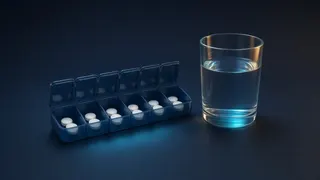
Morning temperature and medicines.
Fluids all day.
Movement and rest.
Evening hygiene.
03Scientific explanation
Studies: a daily routine and a symptom diary improve medicine-taking and communication with the team.
ESPEN: enough energy and protein matter for preventing weight and muscle loss in people with cancer, and nutritional status should be assessed regularly.
NCI: practical eating tips exist for treatment side effects such as nausea, taste changes and mouth sores.
04What happens in the body?
The diary
Phone or paper, whichever is easier.

The family's role
A family member can keep track of medicine times.

Dietitian
If you are losing weight, have no appetite or need a special diet, ask to see the hospital dietitian.
Food safety
Food-safety rules for neutropenia (see “Handwashing: the simplest protection” and “Eggs and dairy: safe choices”) apply at every stage.
05Nutrition: four steps
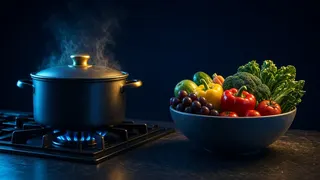
Assess, swap the risky, cook safely, eat regularly.





06Key points at a glance
| Topic | In brief |
|---|---|
 The diary | Phone or paper, whichever is easier. |
 The family's role | A family member can keep track of medicine times. |
 Dietitian | If you are losing weight, have no appetite or need a special diet, ask to see the hospital dietitian. |
| Food safety | Food-safety rules for neutropenia (see “Handwashing: the simplest protection” and “Eggs and dairy: safe choices”) apply at every stage. |
07Key terms
- Symptom diary
- A daily record of symptoms.
- Routine
- A repeated daily pattern.
- Dietitian
- A nutrition specialist.
- Protein
- A nutrient for repairing muscles and tissues.
- Neutropenia
- Low neutrophils.
08Key points
- Create a rhythm.
- Write it down.
- Stay flexible.
- A diet is not a treatment.
- Talk to a dietitian.
09Frequently asked questions
Must every day be the same?
No; hospital days and home days differ.
I forgot a medicine; what now?
Ask your pharmacist or team; do not take a double dose.
Can a special diet cure leukemia?
No. Good nutrition helps you cope with treatment, but it does not cure.
10Questions for your doctor
Take these questions to your appointment. The ones you save are collected on the “My questions” page and stay on this device only.
Must every day be the same?
I forgot a medicine; what now?
Can a special diet cure leukemia?
12Sources
- National Cancer Institute. Eating Hints: Before, During, and After Cancer Treatment
- ESPEN. ESPEN practical guideline: Clinical Nutrition in cancer (2021)
- Leukemia & Lymphoma Society. Food and Nutrition
- World Health Organization. Healthy diet fact sheet
- MedlinePlus (U.S. National Library of Medicine). Iron
- MedlinePlus (U.S. National Library of Medicine). Potassium
- NHS. Vitamins and minerals: Iron
- NHS. Vitamins and minerals: Calcium
- NHS. Vitamins and minerals: Others (magnesium, potassium, zinc, selenium and more)
- NIH Office of Dietary Supplements. Iron — Fact Sheet for Consumers