Food and medicines: with what, and when
Some foods change how medicines are absorbed or broken down. In leukemia treatment this matters especially: tyrosine kinase inhibitors, antifungals and immunosuppressants are sensitive to food. This section covers the main rules.

01Short answer
02Simple explanation
Empty stomach or with food: ask.
No grapefruit.
Milk and calcium: leave a gap.
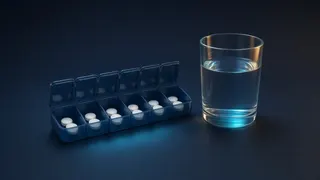
Medicines with water.
03Scientific explanation
FDA: grapefruit juice blocks the CYP3A4 enzyme in the gut and can dangerously raise blood levels of some medicines.
NCCIH: "natural" does not mean "safe"; the contents and quality of supplements are not checked as strictly as medicines.
04What happens in the body?
Posaconazole and others
Some medicines are absorbed better with a fatty meal; check the leaflet.

Alcohol
It interacts with many medicines and strains the liver.

Interactions
Supplements can change medicine levels in the blood through liver enzymes such as CYP3A4.
Food first
A varied diet usually provides the vitamins you need; supplements only when there is a need.
05Supplements: four steps
List them, show your team, check the evidence, take only with agreement.





06Key points at a glance
| Topic | In brief |
|---|---|
 Posaconazole and others | Some medicines are absorbed better with a fatty meal; check the leaflet. |
 Alcohol | It interacts with many medicines and strains the liver. |
 Interactions | Supplements can change medicine levels in the blood through liver enzymes such as CYP3A4. |
| Food first | A varied diet usually provides the vitamins you need; supplements only when there is a need. |
07Key terms
- CYP3A4
- An enzyme that breaks down many medicines.
- TKI
- A tyrosine kinase inhibitor, such as imatinib.
- Dietary supplement
- A product of vitamins, minerals, herbs or other substances.
- Interaction
- One substance changing the effect of another.
08Key points
- Ask the rule.
- Avoid grapefruit.
- Watch the timing.
- A supplement is not a treatment.
- Report every one.
09Frequently asked questions
Are oranges OK?
Ordinary sweet oranges usually are; Seville (bitter) oranges are not.
Can I take my medicine with juice?
Water is best unless told otherwise.
Is a "natural" supplement harmless?
No. Natural substances can also act strongly and interact.
10Questions for your doctor
Take these questions to your appointment. The ones you save are collected on the “My questions” page and stay on this device only.
Are oranges OK?
Can I take my medicine with juice?
Is a "natural" supplement harmless?
12Sources
- U.S. Food and Drug Administration. Grapefruit Juice and Some Drugs Don't Mix
- NIH Office of Dietary Supplements. Dietary Supplement Fact Sheets
- NCCIH. Using Dietary Supplements Wisely
- National Cancer Institute. Complementary and Alternative Medicine
- Memorial Sloan Kettering. About Herbs, Botanicals and Other Products
- European Food Safety Authority (EFSA). Salmonella
- Harvard T.H. Chan School of Public Health — The Nutrition Source. Protein
- U.S. FDA. Advice about Eating Fish
- MedlinePlus. Prednisone
- World Health Organization. Brucellosis fact sheet