BCL-2 and other targets
Targeted drugs act on specific weak points of leukemia cells. This topic explains the BCL-2 inhibitor venetoclax and the other main targets used in leukemia.

01Short answer
02Simple explanation
A brake on death. BCL-2 stops the leukemia cell from dying.
Releasing the brake. Venetoclax releases that brake.
Many targets. Each leukemia may have its own weak points.
Testing matters. A target is found only by testing.
03Scientific explanation
BCL-2 and the mitochondria: BCL-2 holds back the BAX/BAK proteins; venetoclax is a BH3 mimetic that blocks BCL-2, so the mitochondrial membrane becomes permeable and apoptosis begins (NCI).
Tumour lysis and interactions: in CLL a 5-week dose ramp-up, hydration, uric-acid-lowering drugs and electrolyte monitoring are needed. Strong CYP3A inhibitors (such as posaconazole) raise venetoclax levels, so the dose must be adjusted — only by the doctor.
Other targets: FLT3 inhibitors with chemotherapy or at relapse; IDH inhibitors can cause differentiation syndrome; menin inhibitors are approved for relapsed AML with KMT2A rearrangement and NPM1 mutation (in some countries). Targeted drugs can also lead to resistance.
04What happens in the body?
How does venetoclax work?
A damaged cell normally destroys itself. The leukemia cell blocks this process using BCL-2. Venetoclax removes the block, and the cell "can die" again.
A map of targets
At diagnosis, a broad genetic panel is done to find possible targets. One person may have more than one target; new targets can appear at relapse.

Living with targeted treatment
Many targeted drugs are tablets taken as an outpatient. They also have side effects — low blood counts, nausea, diarrhoea, infections — and need regular monitoring.

05Starting venetoclax
A simplified outline.



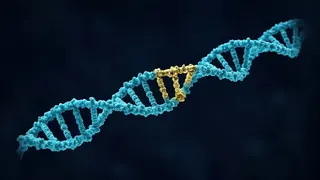

06Main molecular targets in leukemia
| Target | Example drugs | Where |
|---|---|---|
| BCL-2 | Venetoclax | CLL, AML |
| FLT3 | Midostaurin, gilteritinib, quizartinib | AML |
| IDH1 / IDH2 | Ivosidenib, olutasidenib, enasidenib | AML |
| BCR::ABL1 | Imatinib and other TKIs | CML, Ph+ ALL |
| BTK | Ibrutinib, acalabrutinib, zanubrutinib, pirtobrutinib | CLL |
| Menin | Revumenib and others | KMT2A, NPM1 AML (relapse) |
* Availability varies by country; your doctor makes the choice.
07Key terms
- BCL-2
- A protein that prevents cell death.
- Venetoclax
- A BCL-2 inhibitor.
- BH3 mimetic
- A drug group that blocks BCL-2.
- Targeted therapy
- Treatment aimed at a specific molecule.
- Menin
- A protein important in KMT2A and NPM1 leukemias.
- Tumour lysis syndrome
- Disturbed blood salts from rapid cell breakdown.
08Key points
- BCL-2 protects the leukemia cell from death.
- Venetoclax removes that protection.
- The dose is increased gradually.
- There are many other targets.
- A target is found only by testing.
- Check for interactions.
09Frequently asked questions
Is targeted treatment gentler than chemotherapy?
It is often better tolerated, but not free of side effects.
Why drink so much?
Fluid helps the kidneys clear the products of broken-down cells.
Why does an antifungal change the dose?
Some antifungals slow down how venetoclax is broken down.
Does my leukemia have a target?
Your doctor will tell you based on your genetic test results.
10Questions for your doctor
Take these questions to your appointment. The ones you save are collected on the “My questions” page and stay on this device only.
Is targeted treatment gentler than chemotherapy?
Why drink so much?
Why does an antifungal change the dose?
Does my leukemia have a target?
12Sources
- National Cancer Institute (NCI). Targeted Therapy to Treat Cancer
- National Cancer Institute (NCI). Adult Acute Myeloid Leukemia Treatment (PDQ) – Patient Version
- National Cancer Institute (NCI). Chronic Lymphocytic Leukemia Treatment (PDQ) – Patient Version
- Cancer Research UK. Treatment for chronic lymphocytic leukaemia (CLL)
- MedlinePlus. Venetoclax
- American Cancer Society. Targeted Therapy Drugs for Acute Myeloid Leukemia (AML)
- National Cancer Institute (NCI). Cancer Pain (PDQ) – Patient Version
- National Cancer Institute (NCI). Pain and Cancer Treatment
- Macmillan Cancer Support. Pain
- Cancer Research UK. Cancer and pain control