ALL: symptoms and diagnosis
Acute lymphoblastic leukemia is the most common cancer in children, but it also occurs in adults. Its signs often look like a viral infection, “growing pains” or ordinary tiredness. This topic explains what to watch for, when urgent help is needed, the order of the tests and roughly what the results mean.

01Short answer
02Simple explanation
In ALL, immature cells of the lymphoid family — lymphoblasts — multiply out of control in the bone marrow. They crowd out healthy red cells, white cells and platelets. That is why some symptoms resemble AML: tiredness, pallor, fever, frequent infections, and bruising or bleeding easily.
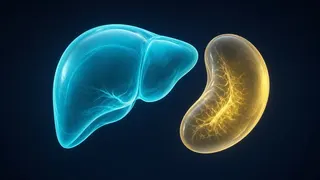
Through the blood, lymphoblasts can reach the lymph nodes, liver and spleen, sometimes the fluid around the brain and spinal cord, and in boys the testicles. So there may be painless swollen lymph nodes (in the neck, armpits or groin), a full feeling in the belly, headache, nausea or a painless swelling of a testicle.
In children, bone and joint pain is one of the common first signs: a child may limp, refuse to walk, want to be carried or wake at night in pain. This pain is sometimes put down to a knock or “growing pains”. If it comes with pallor, fever and bruising, a blood test is important.
In T-cell ALL, a mass can form at the front of the chest (in the thymus area). By pressing on the airways and large blood vessels, it can cause cough, breathlessness — especially when lying flat — and swelling of the face and neck. This is an emergency.
The diagnosis is made step by step: a blood count and smear, then the bone marrow, flow cytometry and genetic tests. In ALL the spinal fluid is also checked, because leukemia cells can hide around the brain. The results decide how intensive treatment will be and which drugs are added. Today the great majority of children and many adults reach long-lasting remission with modern treatment.
03Scientific explanation
The blood count usually shows anemia and thrombocytopenia; the white cell count may be high, normal or low. The smear may show lymphoblasts, but they cannot always be told apart from myeloblasts under the microscope — flow cytometry is needed for that. Blood chemistry (LDH, uric acid, potassium, phosphate, calcium, creatinine) assesses the risk of tumour lysis syndrome, and clotting tests (including fibrinogen) look for DIC and provide a baseline before treatment. A chest X-ray or CT, especially when T-ALL is suspected, is done before any sedation or anaesthetic to look for a mediastinal mass.
A bone marrow aspirate and biopsy confirm the diagnosis; ALL is usually diagnosed when lymphoblasts make up ≥20% of the marrow. If the disease is mainly in lymph nodes or the mediastinum with few marrow blasts, it is called lymphoblastic lymphoma — another form of the same disease. Flow cytometry determines the lineage. B-ALL: CD19, CD22, cytoplasmic CD79a, often CD10, TdT and CD34; T-ALL: cytoplasmic CD3, CD7, CD1a, CD2, CD5 and others. Whether CD19, CD22 and CD20 are present matters, because some immune therapies (blinatumomab, inotuzumab ozogamicin, rituximab, CAR-T) target exactly these molecules.
Cytogenetic and molecular tests reveal the genetic subtype of ALL. The most urgent is the search for BCR::ABL1 (the Philadelphia chromosome, t(9;22)): if positive, a tyrosine kinase inhibitor is added to treatment; this change becomes more common with age. In children, high hyperdiploidy and ETV6::RUNX1 are usually favourable, while KMT2A rearrangements (especially in infants), hypodiploidy, TP53 changes and a “Philadelphia-like” (Ph-like) profile signal higher risk. Methods include karyotype, FISH, RT-PCR and NGS/RNA panels. At the start, the leukemia’s individual “fingerprint” (immunophenotype, IG/TR rearrangements) is recorded for MRD monitoring.
Spinal fluid obtained by lumbar puncture is checked for blasts; the result is recorded as the CNS status and affects treatment intensity. The first puncture is often combined with the first intrathecal chemotherapy, done by an experienced operator once platelets are adequate. In children, the NCI criteria include age (1–9 years) and the white cell count at diagnosis (<50×10⁹/L) in the risk grouping. Before treatment there may also be an echocardiogram, infection screening, HLA typing when relevant, a pregnancy test, a fertility preservation discussion and a TPMT/NUDT15 test to guide thiopurine dosing. But the strongest prognostic factor is the response to treatment — MRD.
04What happens in the body?
Symptoms that need urgent help
Contact your doctor straight away or call emergency services if: there is a temperature of 38 °C or higher or shivering; breathing is difficult or noisy, or breathlessness gets worse lying flat; the face, neck or arms swell; bleeding will not stop or petechiae are spreading quickly; there is a severe headache, repeated vomiting, a seizure, a drooping face, changes in vision or confusion; much less urine is passed. In a child, take these signs just as seriously.
In what order are the tests done?
Usually: history and examination (lymph nodes, liver, spleen and, in boys, testicles) → complete blood count → blood smear → blood chemistry and clotting tests → chest X-ray → bone marrow aspirate and biopsy → flow cytometry (B or T) → cytogenetic and molecular tests (BCR::ABL1 first) → lumbar puncture. Tests to prepare for treatment run alongside.

What do the results roughly mean?
Flow cytometry shows whether the ALL is B-cell or T-cell. Genetics defines the risk group and whether targeted treatment is possible: for example, tyrosine kinase inhibitors are added in Philadelphia-positive ALL. The spinal fluid result shows how intensively the area around the brain needs treating. After the first weeks of treatment, the MRD result refines the plan further.
Why is the spinal fluid checked?
Lymphoblasts can “hide” in the fluid around the brain and spinal cord, and some ordinary chemotherapy does not reach there well. That is why, in ALL, checking the fluid and giving medicine directly into it (intrathecal treatment) is standard — even when there are no symptoms at all. This helps prevent future relapses.

Questions you can ask your doctor
Is this B-cell or T-cell ALL? Is the Philadelphia chromosome (BCR::ABL1) present? What other genetic findings are there and how do they affect my risk group? Were blasts found in the spinal fluid? Which results are still pending? When and how will MRD be checked? Is a clinical trial an option? What can be done to preserve fertility? Whom do I call at night if there is a fever?
If your child has been diagnosed
Parents often blame themselves with the question “why didn’t I notice sooner?”. The early signs of ALL really do look like ordinary childhood illnesses, and not recognising them is not your fault. It helps to explain things to your child simply and honestly, in a way that suits their age, to bring your questions to the team, and to look for support for yourself too.
05ALL: from symptom to precise diagnosis
An ALL diagnosis usually takes shape in four steps.




06Key tests in ALL and typical findings
| Test | What does it check? | What is often seen in ALL? |
|---|---|---|
| Complete blood count | Red cells, white cells, platelets | Anemia, thrombocytopenia; white cells high, normal or low |
| Blood smear | How the cells look | Lymphoblasts (flow cytometry is needed to tell them from myeloblasts) |
| Chest X-ray / CT | Mediastinal mass | Especially in T-ALL — a mass in the thymus area |
| Bone marrow | Blast percentage | Usually ≥20% lymphoblasts |
| Flow cytometry | B- or T-lineage markers | B: CD19, CD22, cCD79a, CD10, TdT; T: cCD3, CD7, CD1a, CD5 |
| Cytogenetic / molecular tests | Chromosome and gene changes | BCR::ABL1, ETV6::RUNX1, hyperdiploidy, KMT2A, hypodiploidy, Ph-like |
| Lumbar puncture | Blasts in the spinal fluid | Usually negative; if positive, CNS treatment is intensified |
* This table is general information; children’s and adults’ protocols can differ. Discuss your own results with your hematologist.
07Key terms
- Lymphoblast
- An immature cell of the lymphoid line; the main cell of ALL.
- B-ALL / T-ALL
- Subtypes showing whether the leukemia arose from B- or T-lymphocyte precursors.
- Philadelphia chromosome
- The t(9;22) translocation that creates the BCR::ABL1 fusion gene.
- Mediastinal mass
- A tumour in the middle of the chest, often in the thymus area.
- Lumbar puncture
- Taking spinal fluid with a thin needle in the lower back.
- Intrathecal treatment
- Giving a drug directly into the spinal fluid.
- CNS status
- An assessment of whether leukemia has reached the central nervous system.
- Tumour lysis
- A rise in blood salts and acids when many leukemia cells break down quickly.
- Ph-like ALL
- A genetic profile resembling Philadelphia-positive ALL but without BCR::ABL1.
- MRD
- Measurable residual disease — a very small number of leukemia cells left after treatment.
08Key points
- ALL is the most common cancer in children, but it also occurs in adults.
- Signs: tiredness, pallor, fever, bruising, bone pain, swollen lymph nodes.
- Difficulty breathing, face and neck swelling, severe headache or a seizure are emergencies.
- The diagnosis is confirmed with a bone marrow test and flow cytometry: B or T.
- The BCR::ABL1 (Philadelphia) test is done urgently because it changes treatment.
- The spinal fluid is checked as standard in ALL.
- The risk group depends on age, white cell count, genetics and response to treatment (MRD).
- Write down your questions and go through the results with your hematologist.
09Frequently asked questions
Could my child’s leg pain be leukemia?
Most leg pain in children has harmless causes. But if the pain wakes your child at night, they limp, and there is also pallor, fever, bruising or tiredness, see a paediatrician and ask for a blood test.
Is a lumbar puncture dangerous?
It is a widely used and usually safe procedure. Children often have it under a short general anaesthetic. Afterwards there may be a headache or back pain; lying down for a while and drinking fluids is sometimes advised. Tell the team about a severe or long-lasting headache.
What does Philadelphia-positive ALL mean?
It means the leukemia cells carry the BCR::ABL1 change. This used to be considered unfavourable, but tyrosine kinase inhibitors are now used alongside chemotherapy or immunotherapy, and results have improved considerably.
Why hasn’t my treatment started immediately?
Treatment usually starts quickly — often within a few days. Some tests (such as BCR::ABL1) influence the choice of the first drugs, so their result may be awaited. If the situation is urgent, treatment starts right away.
Is ALL in adults different from ALL in children?
Yes. High-risk genetic changes (such as BCR::ABL1) are more common in adults, and tolerance of treatment is different. So there are separate adult protocols, and young adults are often treated with “paediatric-style” protocols.
Do family members need testing after the diagnosis?
ALL is usually not inherited, and relatives do not need screening. If a transplant might be needed, brothers and sisters may be asked for a tissue-matching (HLA) test.
10Questions for your doctor
Take these questions to your appointment. The ones you save are collected on the “My questions” page and stay on this device only.
Which tests confirmed my ALL diagnosis?
Will my spinal fluid be tested, and how is that done?
Has the Philadelphia chromosome been checked?
Which tests are needed before treatment starts?
12Sources
- American Cancer Society. Signs and Symptoms of Acute Lymphocytic Leukemia (ALL)
- American Cancer Society. Tests for Acute Lymphocytic Leukemia (ALL)
- American Cancer Society. How Is Acute Lymphocytic Leukemia Classified?
- American Cancer Society. Signs and Symptoms of Childhood Leukemia
- American Cancer Society. Tests for Childhood Leukemia
- National Cancer Institute (NCI). Adult Acute Lymphoblastic Leukemia Treatment (PDQ®) — Patient Version
- National Cancer Institute (NCI). Childhood Acute Lymphoblastic Leukemia Treatment (PDQ®) — Patient Version
- National Cancer Institute (NCI). Childhood Acute Lymphoblastic Leukemia Treatment (PDQ®) — Health Professional Version
- Blood Cancer United (formerly The Leukemia & Lymphoma Society). Acute lymphoblastic leukemia (ALL) diagnosis
- National Comprehensive Cancer Network (NCCN). NCCN Guidelines for Patients: Acute Lymphoblastic Leukemia
- NHS. Acute lymphoblastic leukaemia — Symptoms
- NHS. Acute lymphoblastic leukaemia — Tests and next steps
- Annals of Oncology (ESMO), 2016. Acute lymphoblastic leukaemia in adult patients: ESMO Clinical Practice Guidelines for diagnosis, treatment and follow-up
- The Lancet, 2020. Acute lymphoblastic leukaemia (review)
- Leukemia (Nature) — WHO 5th edition. WHO Classification of Haematolymphoid Tumours: Lymphoid Neoplasms