Organs of the immune system
The immune system is not a single organ but a network spread throughout the body: from the skin and the body’s linings to the bone marrow, thymus, lymph nodes and spleen. This topic explains in plain language where these organs are, what each one does and what can happen to them in leukemia.

01Short answer
02Simple explanation
The borders. The skin and the linings of the mouth, nose, gut and airways are the body’s “castle walls”. Tears, saliva and stomach acid disarm germs, and coughing and sneezing push them out. Harmless bacteria on the skin also help protect you.
The bone marrow is the immune system’s main “factory”: almost all immune cells are born here from stem cells. B lymphocytes also mature here.
The thymus is a small organ behind the breastbone, above the heart. Here T lymphocytes go to “school” and learn to tell self from foreign. The thymus is large in childhood and slowly shrinks after the teenage years.
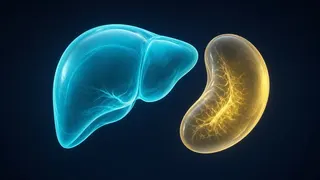
The lymph nodes and the spleen are “filters”. The lymph nodes filter lymph draining from the tissues, and the spleen filters the blood. This is where immune cells meet germs and prepare a response. Swollen nodes during an infection show that the immune system is working.
In leukemia these organs can change: the bone marrow fills with leukemia cells, and the spleen, liver and lymph nodes can enlarge. Treatment, in turn, temporarily affects both leukemia cells and healthy immune cells.
03Scientific explanation
Primary and secondary organs: according to InformedHealth (IQWiG), the bone marrow and thymus are primary lymphoid organs, where lymphocytes are made and mature. The lymph nodes, spleen, tonsils and lymphoid tissue in the body’s linings are secondary organs, where immune responses take place. More than half of the body’s antibody-making cells are in the gut wall, especially in the last part of the small intestine and the appendix.
Spleen and thymus: according to the NCI’s SEER training materials, the spleen is the largest lymphatic organ in the body. Its “white pulp” is made of lymphocytes and its “red pulp” of blood-filled spaces; the spleen filters the blood and, together with the liver, removes old red cells. The thymus is relatively large in infants and children, shrinks after puberty and is quite small in older adults.
Enlarged organs in leukemia: according to the American Cancer Society, in ALL leukemia cells can build up in the liver, spleen and lymph nodes; in T-cell ALL an enlarged thymus can press on the windpipe and a large vein, causing coughing, breathlessness and swelling of the face and neck. In CLL, enlargement of the lymph nodes, spleen and liver is part of the staging systems (Rai, Binet).
Without a spleen: according to the CDC, anatomic or functional asplenia (no spleen, or a spleen that does not work) raises the risk of serious infections, especially with encapsulated bacteria such as pneumococcus and meningococcus, and specific vaccines are recommended for these people. In leukemia, the spleen is occasionally removed by surgery.
04What happens in the body?
When should you get urgent help?
Call your team straight away or call an ambulance if you have: sudden severe pain in the upper left part of the abdomen, especially with dizziness or fainting (an enlarged spleen can rarely be injured); swelling of the face or neck, breathlessness, or a cough that gets worse when lying down; or a temperature of 38 °C or higher during treatment.
The borders: skin and linings
During treatment these walls can weaken: chemotherapy damages the lining of the mouth and gut (mucositis), and catheters and needle sites open “gates” in the skin. That is why mouth care, skin care and keeping the catheter site clean are part of your immune defence.
Bone marrow and thymus: the “schools” of immune cells
The bone marrow makes all blood cells, including immune cells. T lymphocytes then move to the thymus to mature. Although the thymus is small in adults, some T cells live for many years. After intensive treatment or a transplant, T cells can take a long time to recover, especially in older people.

The spleen: the blood’s filter
The spleen sits in the upper left part of the abdomen, under the ribs. It traps germs and old blood cells and stores lymphocytes. In CML, CLL, hairy cell leukemia and some other leukemias the spleen can enlarge, causing a heavy feeling in the abdomen and feeling full quickly. If your spleen is enlarged, talk to your doctor about avoiding contact sports.

How do doctors check these organs?
During an examination, the doctor feels for lymph nodes in the neck, armpits and groin, and for the spleen and liver in the abdomen. When needed, an ultrasound, CT scan or chest X-ray is done. Sometimes a lymph node biopsy clarifies the diagnosis. The bone marrow is checked by aspiration and biopsy.
05The journey of an immune cell
From where it is born to where it works (simplified).



06The main organs of the immune system
| Organ | Where is it? | What does it do? | What can happen in leukemia? |
|---|---|---|---|
| Skin and linings | Body surface, mouth, gut, airways | Keep germs out | Mucositis; a catheter site can become a “gateway” for infection |
| Bone marrow | Inside the bones | Makes immune cells; B cells mature here | Fills with leukemia cells; treatment lowers production |
| Thymus | Behind the breastbone | T cells mature here | Can enlarge in T-cell ALL |
| Lymph nodes | Neck, armpits, groin, chest and abdomen | Filter lymph; immune responses | Can enlarge in ALL and CLL |
| Spleen | Upper left abdomen | Filters blood; removes old cells | Can enlarge in CML, CLL, HCL |
| Tonsils and gut lymphoid tissue | Throat, gut wall | Defend against germs entering through the mouth and food | Defence weakens during mucositis |
* This table is for general understanding. Your hematology team will tell you which organs are affected in your case.
07Key terms
- Primary lymphoid organ
- An organ where lymphocytes are made and mature: the bone marrow and thymus.
- Secondary lymphoid organ
- An organ where immune responses happen: lymph nodes, spleen, tonsils.
- Thymus
- An organ behind the breastbone where T lymphocytes mature.
- Spleen
- An organ that filters blood and stores lymphocytes.
- Lymph node
- A small bean-shaped organ that filters lymph.
- Tonsils
- Lymphoid tissue in the throat.
- Splenomegaly
- An enlarged spleen.
- Asplenia
- Having no spleen, or a spleen that does not work.
- Mucous membrane
- The inner lining of the mouth, gut and airways.
- Mucositis
- Inflammation and damage of the lining caused by treatment.
08Key points
- The immune system is a network of organs throughout the body.
- The skin and linings are the first wall of defence.
- The bone marrow and thymus make and “train” immune cells.
- Lymph nodes filter lymph; the spleen filters blood.
- In leukemia, the spleen, liver and lymph nodes can enlarge.
- Specific vaccines are advised when the spleen does not work.
- Sudden severe abdominal pain or swelling of the face and neck is an emergency.
- Your team monitors the state of your organs.
09Frequently asked questions
Is an enlarged spleen dangerous?
Most often an enlarged spleen only causes discomfort and early fullness, and it shrinks with treatment. Rarely it can be injured, so your doctor may advise avoiding contact sports. If you get sudden severe abdominal pain, seek urgent help.
Can you live without a spleen?
Yes. Other immune organs take over part of its work. But the risk of some bacterial infections rises, so specific vaccines and seeking help quickly when you have a fever are important.
My lymph nodes are swollen. Is it leukemia?
Usually not. Nodes most often swell during an infection and go down within 1–2 weeks. Nodes that keep growing, feel hard or fixed, or come with night sweats, fever or weight loss need a doctor’s examination.
Does the thymus still work in adults?
The thymus shrinks with age but still works to some extent in adults. In addition, some T cells that matured earlier live for years and keep protecting the body.
My tonsils were removed. Is my immunity weak?
Usually not. Other lymphoid tissue in the throat takes over their work.
Does leukemia spread to all immune organs?
That depends on the type of leukemia. In some leukemias the spleen and lymph nodes enlarge, while in others mainly the bone marrow and blood are affected. Your doctor will explain your situation.
10Questions for your doctor
Take these questions to your appointment. The ones you save are collected on the “My questions” page and stay on this device only.
Are my spleen or lymph nodes enlarged?
How will we monitor these organs?
What should I avoid if my spleen is enlarged?
Which signs related to these organs should I report?
12Sources
- InformedHealth.org (IQWiG). What are the organs of the immune system?
- InformedHealth.org (IQWiG). How does the immune system work?
- National Cancer Institute (NCI), SEER Training. Introduction to the Lymphatic System
- National Cancer Institute (NCI), SEER Training. Lymph Nodes
- National Cancer Institute (NCI), SEER Training. Spleen
- National Cancer Institute (NCI), SEER Training. Thymus
- National Cancer Institute (NCI), SEER Training. Tonsils
- National Cancer Institute (NCI). NCI Dictionary of Cancer Terms: thymus
- National Cancer Institute (NCI). NCI Dictionary of Cancer Terms: splenomegaly
- MedlinePlus (U.S. National Library of Medicine). Spleen Diseases
- American Cancer Society. Signs and Symptoms of Acute Lymphocytic Leukemia
- American Cancer Society. Chronic Lymphocytic Leukemia Stages
- Centers for Disease Control and Prevention (CDC). Altered Immunocompetence — General Best Practice Guidelines for Immunization
- Journal of Allergy and Clinical Immunology, 2010. Chaplin DD. Overview of the immune response