How does the immune system work?
The immune system is a living defence network that protects the body from germs and damaged cells. Leukemia and its treatment can weaken several links in this network at the same time. This topic explains in plain language how the immune system is built, what changes in leukemia and why this matters in everyday life.

01Short answer
02Simple explanation
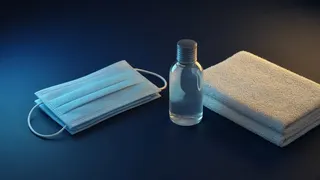
You can compare the immune system to a country’s defences. The border wall is the skin and the body’s linings: they keep germs out. Tears, saliva, stomach acid and the helpful bacteria in the gut are also part of this wall.
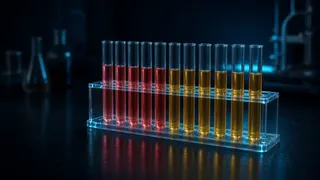
When the wall is breached, a fast patrol — innate immunity — steps in. Neutrophils find and “swallow” bacteria and fungi within hours, monocytes and macrophages clean up and send signals to other cells, and NK cells destroy virus-infected cells. This defence responds to all germs in roughly the same way.
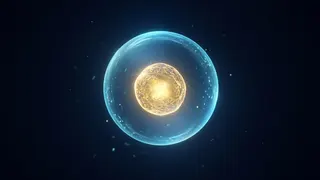
Next, specialist squads — adaptive immunity — join in. T lymphocytes recognise and destroy infected cells, and B lymphocytes make antibodies against a specific germ. This defence starts more slowly, but it is more precise and has a memory: the second time the body meets the same germ, it responds faster. Vaccines make use of exactly this memory.
Most of these “soldiers” are made in the bone marrow and are trained and work in the lymph nodes, spleen and thymus. Neutrophils are short-lived — only hours to about a day in the blood — so the marrow has to replace them in huge numbers every day.
In leukemia, the marrow fills with leukemia cells and the production of normal “soldiers” falls. Treatment also affects healthy cells for a while. As a result, the body becomes more vulnerable to germs. The good news: this period is usually temporary, doctors follow it with blood tests, and a lot can be done to lower the risk of infection.
03Scientific explanation
Innate immunity works through receptors that recognise common molecular “patterns” on germs (for example, parts of the bacterial wall). Neutrophils kill bacteria and fungi by phagocytosis, enzymes and “neutrophil traps”; the complement system — a chain of blood proteins — tags and destroys germs. A normal absolute neutrophil count (ANC) in the blood is roughly 1.5–7.5×10⁹/L; the limits vary a little between laboratories and with a person’s ancestry.
Adaptive immunity starts when antigen-presenting cells (dendritic cells, macrophages) “show” fragments of germs to T lymphocytes. CD4+ T cells direct the response, CD8+ T cells kill infected cells, and B cells become plasma cells and produce immunoglobulins (IgG, IgA, IgM). Memory T and B cells can persist for years.
The ways leukemia weakens defences differ: in acute leukemias, a marrow packed with blasts causes neutropenia; in CLL, normal antibody production can fall (hypogammaglobulinemia) and T-cell function is disturbed; in HCL, monocytes fall. Treatment effects add to this: chemotherapy causes neutropenia and damage to the body’s linings (mucositis); corticosteroids weaken T-cell function and the signs of inflammation; anti-CD20 antibodies and CAR-T therapy can reduce B cells for a long time; after an allogeneic transplant the immune system recovers over months, sometimes years.
International guidelines (for example, ASCO/IDSA) recommend judging infection risk by the type and duration of immune weakness: deep neutropenia (ANC <0.1×10⁹/L) lasting more than a week, transplantation and high-dose steroids raise the risk considerably. Depending on the risk, doctors may prescribe preventive antibiotic, antiviral or antifungal medicines, and sometimes immunoglobulin replacement. These decisions are made individually by the hematology team.
04What happens in the body?
When should you seek urgent help?
During treatment or when your blood counts are low, call your hematology team’s 24-hour number or emergency services straight away if: you have a temperature of 38 °C or higher, or you suddenly feel very unwell (even without a fever); you have shivering, chills, confusion, fast breathing or breathlessness; redness, pain or discharge appears around a catheter. When the immune system is weak, an infection can become serious within hours.
Who are the immune system’s “soldiers”?
Neutrophils — the first responders to bacteria and fungi. Monocytes and macrophages — the “cleaners” and signallers. NK cells — destroy virus-infected and abnormal cells. T lymphocytes — direct the attack and kill infected cells. B lymphocytes — make antibodies. They all work together as one team.

Why does leukemia weaken defences?
Leukemia cells take up space in the marrow and crowd out the production of healthy cells. Although leukemia cells are white blood cells, they usually do not work like normal “soldiers”. That is why, even when the total white cell count on a test is high, there may be few useful neutrophils.

How does treatment affect defences?
Chemotherapy temporarily reduces fast-dividing cells, including healthy blood cells; it can also damage the lining of the mouth and gut. Steroids dampen inflammation and some immune cells. Some targeted and immune treatments lower B cells and antibodies. Catheters can become a “door” for germs through the skin. These effects are usually temporary.
Why does a fever matter so much?
When neutrophils are low, the usual signs of infection — pus, swelling, redness — may be weak or not visible at all. A fever is then often the only signal. That is why during treatment a fever must be taken seriously and reported straight away.
Questions you can ask your doctor
When will my defences be at their weakest? How can I find out my neutrophil count? Do I need preventive medicines? Should my antibody levels be checked? Which signs mean I should call day or night, and on what number? What should my family watch out for? Which vaccines are suitable for me, and which are not?
05From germ to defence: three layers
A healthy immune system stops germs step by step. In leukemia, each of these steps can weaken.


06Main parts of the immune system and what can change in leukemia
| Part | Normal job | What can happen in leukemia and treatment? |
|---|---|---|
| Skin and linings | Keeping germs out | Mucositis, catheters, needle sites — “doors” for germs |
| Neutrophils | Killing bacteria and fungi quickly | Neutropenia — the most important risk factor |
| Monocytes and macrophages | Cleaning up, sending signals | Can fall (for example in HCL and after chemotherapy) |
| T lymphocytes | Directing the attack, killing infected cells | Steroids, some medicines and transplants weaken their function |
| B lymphocytes and antibodies | Making antibodies against specific germs | CLL, anti-CD20 treatment and CAR-T therapy can lower antibodies |
| Bone marrow | Making all blood cells | Leukemia cells and treatment reduce production for a while |
* This table is general information. Your hematology team will tell you which parts are weakened in your case.
07Key terms
- Immune system
- A network of organs, cells and proteins that protects the body from germs and abnormal cells.
- Innate immunity
- Fast, general defence: neutrophils, macrophages, NK cells, complement.
- Adaptive immunity
- Slower but precise defence with memory against a specific germ: T and B lymphocytes.
- Neutrophil
- The main white blood cell that responds first to bacteria and fungi.
- Lymphocyte
- A type of white blood cell that includes T, B and NK cells.
- Antibody (immunoglobulin)
- A protein made by B cells that recognises and tags germs.
- Antigen
- A piece of a germ or cell that the immune system recognises.
- Hypogammaglobulinemia
- Low antibody levels in the blood; seen in CLL and after some treatments.
- Mucositis
- Damage to the lining of the mouth and gut caused by treatment.
- Immune memory
- The ability to “remember” a germ and respond faster the next time.
08Key points
- The immune system has three layers: barriers, fast defence and precise defence.
- Most defence cells are made in the bone marrow.
- Leukemia takes up space in the marrow and lowers healthy white cells.
- Treatment weakens defences for a while.
- When neutrophils are low, a fever is sometimes the only sign.
- A fever during treatment is a reason to call straight away.
- Hygiene, safe food and a vaccination plan lower the risk.
- Your hematology team assesses your risk and the precautions you need.
09Frequently asked questions
My test shows lots of white cells. Does that mean my immunity is strong?
Not necessarily. In leukemia, many of the white cells may be leukemia cells, and they do not do the normal job of defence. Doctors look mainly at the neutrophil count and other measures.
Can I “boost” my immunity with vitamins or herbs?
The immune weakness of leukemia cannot be fixed with vitamins or herbs. Some supplements can also interact with treatment or raise the risk of bleeding. Discuss any supplement with your hematology team first.
When will my immunity recover?
That depends on the type of leukemia and the treatment. After chemotherapy, neutrophils usually recover within a few weeks. Recovery of antibodies and T cells, especially after a transplant or CAR-T therapy, can take months or longer.
Is leukemia contagious?
No. Leukemia does not pass from person to person. But a person with leukemia catches infections from others more easily, so the hygiene of the people around them matters.
Do I need to isolate myself completely?
Usually not. Most people carry on with much of their normal life thanks to daily hygiene, sensible precautions and family support. During special periods (for example, deep neutropenia or after a transplant), the team may recommend extra restrictions.
Do stress and sleep affect immunity?
Sleep, nutrition, physical activity and emotional wellbeing matter for overall health. They do not remove the immune weakness of leukemia, but they can help you feel better and cope with treatment more easily.
10Questions for your doctor
Take these questions to your appointment. The ones you save are collected on the “My questions” page and stay on this device only.
How weak is my immune system right now?
Which tests show the state of my immunity?
For how long will treatment weaken my immune system?
Do I need preventive medicines against infection?
12Sources
- InformedHealth.org (IQWiG), NCBI Bookshelf. In brief: How does the immune system work?
- InformedHealth.org (IQWiG), NCBI Bookshelf. In brief: The innate and adaptive immune systems
- MedlinePlus (U.S. National Library of Medicine). Immune System and Disorders
- Cancer Research UK. The immune system and cancer
- Cancer Research UK. Your blood, bone marrow and cancer drugs
- National Cancer Institute (NCI). Infection and Neutropenia during Cancer Treatment
- American Cancer Society. Why Are People with Cancer More Likely to Get Infections?
- Centers for Disease Control and Prevention (CDC). Neutropenia and Risk for Infection
- Blood Cancer UK. Blood cancer and infection
- Macmillan Cancer Support. Infection
- Journal of Clinical Oncology (ASCO and IDSA), 2018. Antimicrobial Prophylaxis for Adult Patients With Cancer-Related Immunosuppression: ASCO and IDSA Clinical Practice Guideline Update