What is a transplant
A stem cell (bone marrow) transplant replaces a diseased blood-forming system with a healthy one.

01Short answer
02Simple explanation
A transplant is like building a “new blood factory”.
The donor’s healthy stem cells settle in the marrow and start making new blood.
03Scientific explanation
Part of the effect of allogeneic transplant is the “graft-versus-leukemia” effect; the same mechanism can cause graft-versus-host disease (GVHD).
Donors are chosen by HLA matching; related, unrelated, half-matched (haploidentical) and cord blood donors are used.
04What happens in the body?
Who it is recommended for
A transplant is discussed for high-risk acute leukemia, relapse or a poor response to treatment. The decision weighs the patient’s condition, donor availability and the risks.
The stages
Conditioning, the cell infusion, then engraftment, when the new cells take hold. Protection from infection matters most in this period.

Recovery
Recovery takes months. Regular follow-up, rebuilding immunity and watching for GVHD are needed. Support from family and a caregiver is very important.

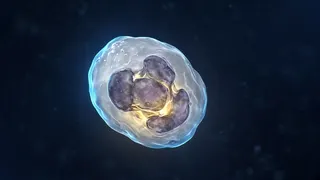
05The transplant journey
Four main stages.



06Key points at a glance
| Topic | In brief |
|---|---|
 Who it is recommended for | A transplant is discussed for high-risk acute leukemia, relapse or a poor response to treatment. The decision weighs the patient’s condition, donor availability and the risks. |
 The stages | Conditioning, the cell infusion, then engraftment, when the new cells take hold. Protection from infection matters most in this period. |
 Recovery | Recovery takes months. Regular follow-up, rebuilding immunity and watching for GVHD are needed. Support from family and a caregiver is very important. |
07Key terms
- Allogeneic
- Taken from another person (a donor).
- Autologous
- Taken from the patient.
- Engraftment
- Infused cells taking hold and starting to make blood.
08Key points
- A transplant replaces the blood-forming system.
- In leukemia it is usually allogeneic.
- The donor is chosen by HLA.
- Recovery takes months.
09Frequently asked questions
Is a transplant an operation?
No, the cells are given into a vein, like a blood transfusion.
How is a donor found?
Brothers and sisters are tested first, then donor registries are searched.
10Questions for your doctor
Take these questions to your appointment. The ones you save are collected on the “My questions” page and stay on this device only.
Is a transplant an operation?
How is a donor found?
12Sources
- National Cancer Institute (NCI). Stem Cell and Bone Marrow Transplants for Cancer
- NHS. Stem cell and bone marrow transplants
- Anthony Nolan. Understanding stem cell transplants
- NHS. Sepsis
- National Cancer Institute (NCI). The Genetics of Cancer
- National Cancer Institute (NCI). Questions to Ask about Cancer Treatment
- National Cancer Institute. NCI Dictionary of Cancer Terms: remission
- National Cancer Institute (NCI). NCI Dictionary of Cancer Terms: blast
- American Cancer Society. Typical Treatment of Acute Lymphocytic Leukemia
- National Cancer Institute (NCI). Side Effects of Cancer Treatment