What is a blast?
“Blast” is one of the most common words in leukemia test reports. Its meaning is simple.

01Short answer
02Simple explanation
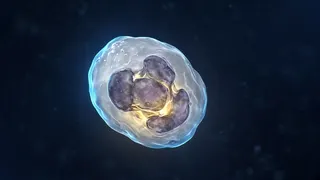
A blast is a “child” cell: it has not yet learned its job.
In leukemia these “children” never grow up and fill the marrow.
03Scientific explanation
Acute leukemia is usually diagnosed when blasts make up 20% or more of the marrow or blood, although some genetic subtypes do not require this threshold.
Flow cytometry shows whether a blast is myeloid or lymphoid.
04What happens in the body?
Normal blasts
New blasts form in the marrow every day and mature step by step. This is part of healthy blood formation.
Leukemia blasts
A genetic change stops the blast maturing. Such blasts multiply and leave no room for healthy cells.

How it shows in tests
The blood film and marrow aspirate report the percentage of blasts. A fall after treatment shows response.

05A blast’s path
Normally and in leukemia.



06Key points at a glance
| Topic | In brief |
|---|---|
 Normal blasts | New blasts form in the marrow every day and mature step by step. This is part of healthy blood formation. |
 Leukemia blasts | A genetic change stops the blast maturing. Such blasts multiply and leave no room for healthy cells. |
 How it shows in tests | The blood film and marrow aspirate report the percentage of blasts. A fall after treatment shows response. |
07Key terms
- Blast
- An immature young blood cell.
- Aspirate
- A liquid marrow sample taken with a needle.
- Maturation
- A cell taking on its working form.
08Key points
- A blast is a young blood cell.
- Normally there are few.
- In acute leukemia blasts multiply.
- The percentage matters for diagnosis and response.
09Frequently asked questions
Are blasts in the blood always leukemia?
No, they sometimes appear after a severe infection or growth factors; the doctor assesses this.
Should the blast percentage be zero?
In remission the marrow can contain a few normal blasts.
10Questions for your doctor
Take these questions to your appointment. The ones you save are collected on the “My questions” page and stay on this device only.
Are blasts in the blood always leukemia?
Should the blast percentage be zero?
12Sources
- National Cancer Institute (NCI). NCI Dictionary of Cancer Terms: blast
- MedlinePlus (U.S. National Library of Medicine). Bone marrow aspiration
- National Cancer Institute (NCI). Adult Acute Myeloid Leukemia Treatment (PDQ®) – Patient Version
- National Cancer Institute (NCI). Adult Acute Lymphoblastic Leukemia Treatment (PDQ®) – Patient Version
- NHS. High temperature (fever) in adults
- National Cancer Institute (NCI). Managing Your Care
- Anthony Nolan. Understanding stem cell transplants
- National Cancer Institute (NCI). Questions to Ask about Cancer Treatment
- American Cancer Society. Typical Treatment of Acute Lymphocytic Leukemia
- National Cancer Institute (NCI). Side Effects of Cancer Treatment