Questions about CML
Chronic myeloid leukemia (CML) is one of the leukemias that has changed most in recent decades: many people now live with it for many years.

01Short answer
02Simple explanation
In CML the cells have a “broken switch” called BCR::ABL1, so they keep dividing.
TKI medicines turn this switch off.
03Scientific explanation
CML is described in three phases: chronic, accelerated and blast phase (newer classifications have reduced the role of the accelerated phase). With modern treatment most patients stay in the chronic phase.
Molecular response is measured on the International Scale (IS); some patients with a deep, lasting response can stop treatment under strict monitoring (treatment-free remission).
04What happens in the body?
How it is diagnosed
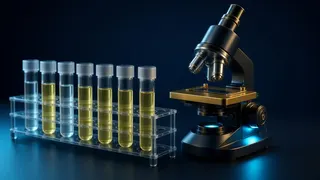
Often a routine blood test shows a high white cell count. Bone marrow and genetic tests (cytogenetics, FISH, PCR) then confirm the Philadelphia chromosome.
How treatment works
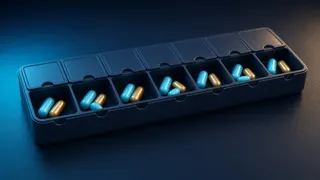
TKIs are usually tablets taken every day. Side effects differ between drugs and are often manageable. Never stop the medicine or change the dose on your own.

Monitoring
PCR tests are done regularly. If targets are not met, the doctor may switch drugs or test for mutations.

05The path in CML
The main stages.


06Key points at a glance
| Topic | In brief |
|---|---|
| How it is diagnosed | Often a routine blood test shows a high white cell count. Bone marrow and genetic tests (cytogenetics, FISH, PCR) then confirm the Philadelphia chromosome. |
| How treatment works | TKIs are usually tablets taken every day. Side effects differ between drugs and are often manageable. Never stop the medicine or change the dose on your own. |
| Monitoring | PCR tests are done regularly. If targets are not met, the doctor may switch drugs or test for mutations. |
07Key terms
- Philadelphia chromosome
- A change caused by chromosomes 9 and 22 swapping pieces.
- TKI
- Tyrosine kinase inhibitor, a drug that blocks BCR::ABL1.
- Molecular response
- A fall in BCR::ABL1 levels on PCR.
08Key points
- CML is caused by BCR::ABL1.
- TKIs keep the disease under control.
- PCR tracks treatment.
- Taking the medicine without gaps matters.
09Frequently asked questions
What if I miss a day of my TKI?
Tell your team; frequent missed doses can worsen the result.
Can I stop treatment?
Only on your doctor’s decision and with strict PCR monitoring.
Can I work with CML?
Many people work and live ordinary lives.
10Questions for your doctor
Take these questions to your appointment. The ones you save are collected on the “My questions” page and stay on this device only.
What if I miss a day of my TKI?
Can I stop treatment?
Can I work with CML?
12Sources
- National Cancer Institute (NCI). Chronic Myeloid Leukemia Treatment (PDQ®) – Patient Version
- NHS. Chronic myeloid leukaemia
- MedlinePlus (U.S. National Library of Medicine). Leukemia
- National Cancer Institute (NCI). Leukemia—Patient Version
- Anthony Nolan. Understanding stem cell transplants
- National Cancer Institute (NCI). Questions to Ask about Cancer Treatment
- American Cancer Society. Typical Treatment of Acute Lymphocytic Leukemia
- National Cancer Institute (NCI). Side Effects of Cancer Treatment
- National Cancer Institute (NCI). Bleeding and Bruising (Thrombocytopenia) and Cancer Treatment
- NHS (UK). Acute myeloid leukaemia