Leukemia, lymphoma, myeloma and MDS: what is the difference?
Leukemia, lymphoma, myeloma, MDS — these words are often heard together and easily confused. All of them arise from cells of the blood and immune system, but they differ in where they start, which cells they involve and how they are treated. This topic explains the differences simply.

01Short answer
02Simple explanation
Imagine blood cells as a large family tree. At the root are the marrow’s stem cells, and on the branches are different families of cells. Which branch and which stage the problem arises in determines the name of the disease.
Leukemia — the problem starts mainly in the bone marrow, and abnormal cells are often seen in the blood too. Lymphoma — the problem starts in the lymphatic system, in lymphocytes, and forms tumors mainly in the lymph nodes and spleen. The main sign is often painlessly swollen lymph nodes.
Myeloma is a cancer of the plasma cells that make antibodies. Abnormal plasma cells gather in the marrow and make large amounts of one identical, useless antibody. This can cause bone pain and damage, kidney problems, anemia and high calcium in the blood.
MDS (myelodysplastic syndromes) — the marrow makes cells, but they do not mature properly and die early. As a result, blood counts fall. In some cases MDS turns into AML over time. In MPNs, the opposite happens: the marrow makes too many of certain cells — for example red cells or platelets.
Why do these differences matter? Because each disease has its own diagnostic path, its own staging system and its own treatment. But they are usually all treated by the same kind of specialist — a hematologist (or hematologist-oncologist).
03Scientific explanation
WHO 2022 divides hematolymphoid tumors into two large groups: myeloid (AML, MDS, MPN, MDS/MPN, CML and others) and lymphoid (B- and T/NK-cell neoplasms, including ALL, CLL, lymphomas and plasma cell neoplasms). The line between leukemia and lymphoma is often drawn by the main site of disease: for example, B-lymphoblastic leukemia/lymphoma and CLL/SLL are the same biological disease showing mainly in the marrow and blood or mainly in the lymph nodes. Burkitt lymphoma can have a leukemic phase, and some lymphomas spread to the marrow.
Lymphomas: according to the NCI, non-Hodgkin lymphoma forms in the lymph system and can be indolent (slow) or aggressive; its signs are painlessly swollen lymph nodes, fever, drenching night sweats, weight loss and fatigue. Hodgkin lymphoma is defined by characteristic Reed–Sternberg cells. Diagnosis is usually made by a lymph node biopsy, and the stage by PET-CT — unlike leukemia, anatomical staging (I–IV) plays the main role here.
Plasma cell neoplasms: the NCI distinguishes MGUS (not cancer, but can become cancer), plasmacytoma and multiple myeloma. In myeloma, the monoclonal protein (M-protein) can thicken the blood and damage the kidneys; the classic picture is high calcium, kidney failure, anemia and bone damage. The stage is based on blood levels of beta-2-microglobulin and albumin. Waldenstrom macroglobulinemia (lymphoplasmacytic lymphoma) is a separate disease that produces IgM.
MDS, according to the NCI, is a group of cancers in which immature marrow cells do not become healthy blood cells; the main features are cytopenias, dysplasia and clonal genetic changes, and rising blasts raise the risk of AML. MPNs (CML, polycythemia vera, essential thrombocythemia, primary myelofibrosis, chronic neutrophilic and eosinophilic leukemias) are marked by overproduction of cells and linked to “driver” mutations in JAK2, CALR and MPL. “Precursor” states such as CHIP (clonal hematopoiesis of indeterminate potential) and MGUS are not diseases, but can signal future risk.
04What happens in the body?
Where does each disease start?
Leukemia — in the marrow and blood; lymphoma — in the lymph nodes and lymphoid tissues; myeloma — in the plasma cells of the marrow; MDS and MPNs — in the myeloid stem and precursor cells of the marrow. But these diseases can spread beyond these places, so the boundaries are not always sharp.

Different diagnostic paths
For leukemia, MDS and MPNs, the key test is a bone marrow aspirate and biopsy. Lymphoma usually needs a biopsy of a lymph node or tissue, and myeloma needs a marrow examination together with measurement of monoclonal protein in the blood and urine and bone imaging. Flow cytometry and genetic tests play an important role in all of them.
Leukemia or lymphoma? Borderline diseases
Some diseases can look like both leukemia and lymphoma. CLL and small lymphocytic lymphoma are the same disease; B- and T-lymphoblastic leukemia and lymphoma are also forms of one disease. Which name is used depends mainly on where most of the disease is.

Approaches to treatment
Some of these diseases (for example acute leukemias and aggressive lymphomas) need urgent, intensive treatment, while others (for example lower-risk MDS, some MPNs, early CLL and MGUS) can be managed with monitoring or gentle treatment. Each has its own risk systems.
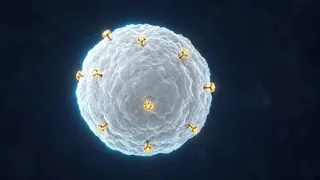
05One root — different diseases
Where the problem arises determines the name of the disease.




06Blood cancers compared (simplified)
| Disease | Where does it start? | Which cells? | Typical signs | Key tests |
|---|---|---|---|---|
| Leukemia | Bone marrow and blood | Myeloid or lymphoid cells | Tiredness, infections, bleeding | Blood count, marrow examination |
| Lymphoma | Lymph nodes, spleen, lymphoid tissues | B, T or NK lymphocytes | Painlessly swollen nodes, fever, night sweats, weight loss | Node biopsy, PET-CT |
| Multiple myeloma | Bone marrow | Plasma cells | Bone pain, anemia, kidney problems, high calcium | M-protein (blood, urine), marrow, bone imaging |
| MDS | Bone marrow | Myeloid stem and precursor cells | Low blood counts, tiredness | Marrow examination, genetics |
| MPN | Bone marrow | Myeloid cells | Too many red cells, platelets or white cells; enlarged spleen | Blood count, JAK2/CALR/MPL tests, marrow |
* This table is a general overview; each group contains many subtypes, and signs vary greatly between individuals.
07Key terms
- Leukemia
- A blood cancer that starts mainly in the marrow and blood.
- Lymphoma
- A cancer of lymphocytes in the lymphatic system.
- Hodgkin lymphoma
- A lymphoma defined by Reed–Sternberg cells.
- Multiple myeloma
- A cancer of plasma cells.
- M-protein
- The single type of antibody made by myeloma cells.
- MGUS
- Monoclonal gammopathy of undetermined significance — not cancer, but carries a risk.
- MDS
- Myelodysplastic syndromes — marrow diseases in which cells do not mature properly.
- MPN
- Myeloproliferative neoplasms — overproduction of blood cells.
- PET-CT
- An imaging method that shows how far a lymphoma has spread.
- Hematologist
- A doctor who specialises in blood diseases.
08Key points
- All blood cancers start in blood or immune cells.
- Leukemia starts mainly in the marrow and blood.
- Lymphoma arises in the lymphatic system from lymphocytes.
- Myeloma is a cancer of plasma cells and can damage bones and kidneys.
- In MDS, cells do not mature properly; it sometimes progresses to AML.
- In MPNs, certain cells are overproduced.
- Boundaries are sometimes blurred: for example, CLL and SLL are one disease.
- All of them are usually treated by a hematologist.
09Frequently asked questions
Can leukemia turn into lymphoma?
Sometimes one disease can change into another form. For example, CLL can rarely turn into an aggressive lymphoma (Richter transformation). But in most cases each disease keeps its own character.
Is MDS a leukemia?
MDS is not leukemia, but it is a closely related marrow disease, and the NCI classes it as a cancer. Some types of MDS progress to AML over time, while others stay stable for years. Your doctor assesses the level of risk using special scoring systems.
I have been diagnosed with MGUS. Is that myeloma?
No. MGUS is not cancer, but a small proportion of cases may progress to myeloma or another disease over time. That is why regular monitoring, rather than treatment, is usually recommended.
Why is the marrow examined in lymphoma?
Because some lymphomas can spread to the marrow, and this affects the stage and treatment. In leukemia, conversely, lymph nodes and other organs may be checked.
Are the treatments for these diseases similar?
Some treatments (for example certain antibodies, types of chemotherapy and stem cell transplant) are used in several diseases, but treatment plans differ a lot. Each disease has its own standards and risk systems.
How can I find out which group my diagnosis belongs to?
Ask your hematologist to write down the full name of your diagnosis, its subtype and the results of the key tests. This will help you look for the right information and get a second opinion.
10Questions for your doctor
Take these questions to your appointment. The ones you save are collected on the “My questions” page and stay on this device only.
Is my diagnosis leukemia, lymphoma or MDS?
How does this difference affect treatment?
Could my illness change into another form over time?
Which check-ups will be done to monitor this?
12Sources
- National Cancer Institute (NCI). Adult Non-Hodgkin Lymphoma Treatment (PDQ®) — Patient Version
- National Cancer Institute (NCI). Adult Hodgkin Lymphoma Treatment (PDQ®) — Patient Version
- National Cancer Institute (NCI). Plasma Cell Neoplasms (Including Multiple Myeloma) Treatment (PDQ®) — Patient Version
- National Cancer Institute (NCI). Myelodysplastic Syndromes Treatment (PDQ®) — Patient Version
- National Cancer Institute (NCI). Chronic Myeloproliferative Neoplasms Treatment (PDQ®) — Patient Version
- National Cancer Institute (NCI). Chronic Lymphocytic Leukemia Treatment (PDQ®) — Patient Version
- NHS. Non-Hodgkin lymphoma
- NHS. Hodgkin lymphoma
- NHS. Multiple myeloma
- American Society of Hematology. Myeloid Malignancy Precursor Conditions
- American Society of Hematology. Lymphoma (patient education)
- American Society of Hematology. Myeloma (patient education)
- Leukemia (Nature) — WHO 5th edition. WHO Classification of Haematolymphoid Tumours: Myeloid and Histiocytic/Dendritic Neoplasms
- Leukemia (Nature) — WHO 5th edition. WHO Classification of Haematolymphoid Tumours: Lymphoid Neoplasms