Mett (raw minced pork)
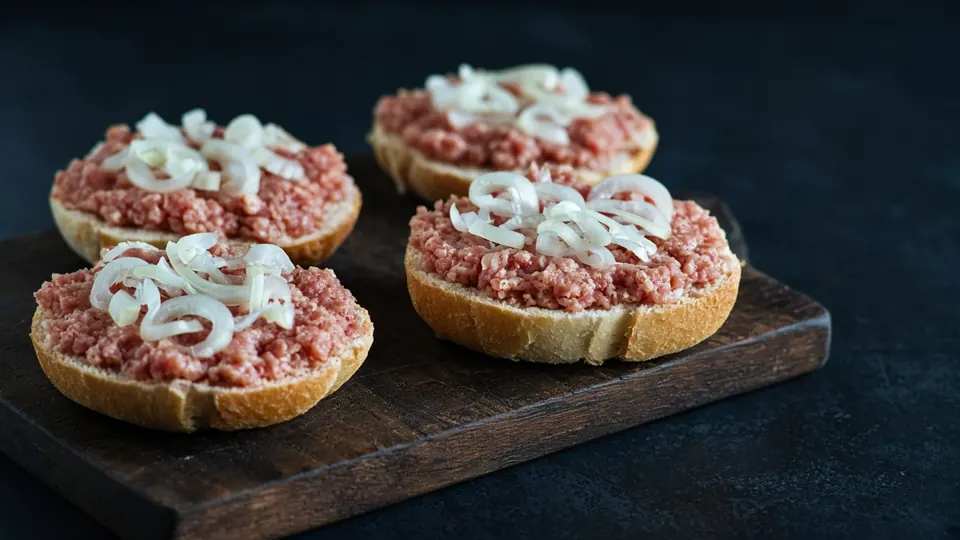
Raw minced pork seasoned with salt and pepper and spread on a bread roll (Mettbroetchen).
Not in its traditional form with low immunity
Ingredients
- raw minced pork
- salt
- pepper
- raw onion
- bread roll
How it is prepared
The mince is seasoned and spread on bread without cooking.
Food safety with low immunity
- Minced meat and dishes made from it must always be fully cooked — including the middle.
How to prepare it during treatment
Raw mince is high-risk with low immunity. Alternative: a fully cooked meat patty (Frikadelle).
Your diet during treatment is agreed with your doctor. Sample 7-day menu for the treatment period →
Storage
Made from a raw product: it is bought fresh from a trusted place rather than stored; usually not advised with low immunity.
Reheating
Not reheated. With low immunity choose a cooked alternative.
Symptoms it may suit
No specific symptom notes for this dish.
Treatment phases
- Before treatmentnot advised
- During a coursenot advised
- Low counts (neutropenia)not advised
- Between coursesnot advised
- After treatmentOnly after your team confirms your immunity has recoveredmay suit
Phase notes are general. During low counts, follow only your care team’s food rules.
If you have other conditions
- High blood pressure, Heart disease, Kidney disease. Often salty (stock, salty cheese, sausage, pickles). With high blood pressure, heart or kidney disease, discuss salt limits with your team.
- Heart disease, Obesity, Liver disease, Stomach and gut. Can be fatty. With heart, liver or digestive disease, or excess weight, discuss fat content and portions with your team.
Nutrition (per 100 g)
Nutrition figures from a reliable source have not been added for this dish yet.
More from this cuisine
Related topics
Food safetyNeutropenic diet (low-microbial diet)PasteurisedCore cooking temperatureLeftoversCross-contamination
Sources
- Centers for Disease Control and Prevention (CDC). Safer Food Choices for People With Weakened Immune Systems
- FoodSafety.gov (U.S. HHS). Cook to a Safe Minimum Internal Temperature
- USDA Food Safety and Inspection Service. Leftovers and Food Safety
- U.S. Food and Drug Administration (FDA). Food Safety for Older Adults and People with Cancer, Diabetes, HIV/AIDS, Organ Transplants, and Autoimmune Diseases
- Food Standards Agency (UK). Chilling
- World Health Organization (WHO). Five keys to safer food manual
- Memorial Sloan Kettering Cancer Center. Food Safety During Cancer Treatment
- National Cancer Institute (NCI). Eating Hints: Before, during, and after Cancer Treatment
- BMJ Supportive & Palliative Care, 2019. Neutropenic diets to prevent cancer infections: updated systematic review and meta-analysis
- U.S. Department of Agriculture (USDA). FoodData Central — Food and Nutrient Database for Dietary Studies (FNDDS)