Netherlands: Diagnostics
In the Netherlands, diagnosing leukaemia often starts with a blood test ordered by the GP.

01Short answer
02Simple explanation
Blood test: first step.
Bone marrow: exact diagnosis.
Genetics: for the plan.
03Scientific explanation
Flow cytometry identifies cell surface markers.
Molecular tests find changes that affect treatment choice and outlook.
04What happens in the body?
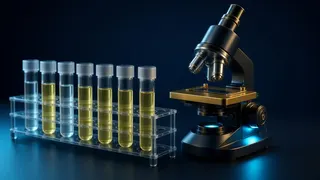
Laboratory
Blood samples are checked in the hospital laboratory.
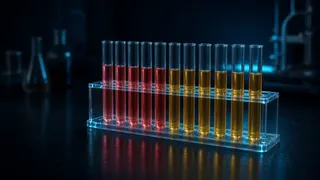
Bone marrow
The sample is studied under the microscope and with special tests.

The talk
While hearing results, take notes and ask again.

05Path to a diagnosis
Four steps.



06Key points at a glance
| Topic | In brief |
|---|---|
 Laboratory | Blood samples are checked in the hospital laboratory. |
 Bone marrow | The sample is studied under the microscope and with special tests. |
 The talk | While hearing results, take notes and ask again. |
07Key terms
- Bloedonderzoek
- Blood test.
- Beenmergpunctie
- Bone-marrow test.
- Flowcytometrie
- Flow cytometry.
- Uitslag
- Result.
08Key points
- Ask for results in writing.
- Bring someone close.
- Write down questions.
- Ask the name of the type.
- Know your next appointment.
09Frequently asked questions
How long do results take?
Some tests take days, genetic tests longer; ask your team.
Can I see my results?
Many hospitals have an online patient portal.
Does the test hurt?
Local anaesthetic is used; tell your team about your worries.
10Questions for your doctor
Take these questions to your appointment. The ones you save are collected on the “My questions” page and stay on this device only.
How long do results take?
Can I see my results?
Does the test hurt?
12Sources
- Kanker.nl (KWF, IKNL, NFK). Official website (in Dutch)
- Hematon. Patient organisation for blood cancer (in Dutch)
- National Cancer Institute (NCI). Questions to Ask Your Doctor about Your Diagnosis
- MedlinePlus (U.S. National Library of Medicine). Bone marrow aspiration
- Mevzuat Bilgi Sistemi (Türkiye). Hasta Hakları Yönetmeliği, Resmî Gazete 01.08.1998, No. 23420 (in Turkish)
- CİMER (Presidential Communication Centre, Türkiye). Official website (in Turkish)
- GOV.UK (FCDO). Turkey travel advice: health
- International Agency for Research on Cancer (IARC/WHO). Global Cancer Observatory: the Netherlands fact sheet
- IKNL (Netherlands Comprehensive Cancer Organisation). Official website
- Government of the Netherlands. Health insurance