Türkiye: Transplantation
A stem cell transplant is one of the main treatments for some types of leukaemia. This chapter explains how transplants are organised in Türkiye.

01Short answer
02Simple explanation
Allogeneic: from a donor; autologous: your own cells.
TÜRKÖK: unrelated donor search.
JACIE: quality accreditation.
03Scientific explanation
Stages: according to the NCI, a transplant involves preparatory (conditioning) treatment, infusion of stem cells and engraftment (recovery of blood production).
Quality: EBMT and JACIE set international standards for transplant centres.
04What happens in the body?
Preparation
Heart, lung, kidney and infection checks; donor selection; a dental check. A care plan is made with the family.

The transplant period
Conditioning chemotherapy, stem cell infusion and several weeks in a protective isolation room.

Afterwards
Long-term follow-up: graft-versus-host disease (GVHD), infections and a vaccination plan.
05A transplant in four stages
From search to recovery.





06Key points at a glance
| Topic | In brief |
|---|---|
 Preparation | Heart, lung, kidney and infection checks; donor selection; a dental check. A care plan is made with the family. |
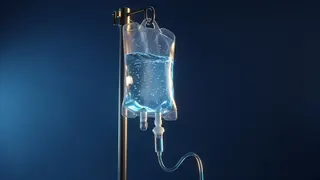 The transplant period | Conditioning chemotherapy, stem cell infusion and several weeks in a protective isolation room. |
| Afterwards | Long-term follow-up: graft-versus-host disease (GVHD), infections and a vaccination plan. |
07Key terms
- Allojenik nakil
- Transplant from a donor.
- Otolog nakil
- Transplant of your own cells.
- GVHD
- Graft-versus-host disease.
- Engraftment
- Recovery of blood production.
08Key points
- The centre decides.
- A related donor is checked first.
- TÜRKÖK searches for unrelated donors.
- Ask about JACIE.
- Follow-up afterwards is long.
09Frequently asked questions
How long does a donor search take?
From weeks to months, depending on the patient’s HLA type.
Can a foreigner have a transplant in Türkiye?
Yes, many centres accept international patients; clarify costs and the donor question in advance.
How long must I stay nearby afterwards?
Often patients are advised to stay near the centre for the first 100 days.
10Questions for your doctor
Take these questions to your appointment. The ones you save are collected on the “My questions” page and stay on this device only.
How long does a donor search take?
Can a foreigner have a transplant in Türkiye?
How long must I stay nearby afterwards?
12Sources
- National Cancer Institute (NCI). Stem Cell and Bone Marrow Transplants for Cancer
- Türkiye Stem Cell Coordination Centre (TÜRKÖK), Ministry of Health. Official website (in Turkish)
- EBMT. European Society for Blood and Marrow Transplantation
- EBMT / JACIE. JACIE accreditation
- Social Security Institution of Türkiye (SGK). General health insurance (Genel Sağlık Sigortası, in Turkish)
- Official website of the President of the Republic of Azerbaijan. Decree on the establishment of the national haematology centre, 23 December 2019 (in Azerbaijani)
- European Observatory on Health Systems and Policies (WHO). Azerbaijan: health system information and resources
- International Agency for Research on Cancer (IARC/WHO). Global Cancer Observatory: Cancer Today
- GOV.UK (FCDO). Azerbaijan travel advice: health
- Cancer.Net (ASCO). The Oncology Team