Rebuilding strength
Muscle strength falls during treatment, but it can be rebuilt with strength exercises. This topic explains how to start strength exercises safely and build them up gradually.

01Short answer
02Simple explanation
Muscle strength falls during treatment.
Strength exercises help muscles, bones and balance.
Recommendation: at least 2 days a week.
You can start at home: chair, wall, band.
If you have problems: a physiotherapist.
03Scientific explanation
Recommendation: the WHO recommends that adults do moderate or vigorous strength exercises involving all major muscle groups on at least 2 days a week.
Home exercises: the NHS shows that simple exercises such as sit-to-stand, wall push-ups and step-ups strengthen muscles effectively.
Survivors: the ACS recommends that survivors combine strength exercises with aerobic activity; this reduces fatigue and muscle loss.
Safety: MedlinePlus notes that good technique, building up gradually and resting between sessions help prevent injury.
04What happens in the body?
Why has my strength gone?
Bed rest, little movement, steroids and weight loss weaken muscles. This is very common after treatment.
Why does strength matter?
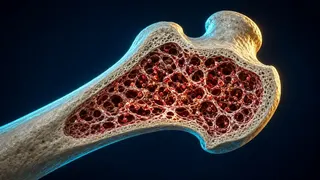
Strong muscles make stairs, carrying and balance easier, protect the bones and lower the risk of falls.
Simple exercises at home
Standing up from a chair, wall push-ups, step-ups, rising onto your toes and pulling a resistance band.

How to build up
Start with 8–12 repetitions. When it gets easy, increase the repetitions, then the load (band, small weights). 2–3 times a week, with rest days in between.

When is a specialist needed?
If you have weak bones, joint pain, neuropathy, or heart or lung problems, a physiotherapist builds a personal, safe programme.
When to call your doctor
Worrying signs — fever, bleeding, new pain, breathlessness — should be reported to your doctor between visits too. Getting in touch early is always better than waiting.
05Rebuilding strength
Steps.




06Strength exercises at home (simplified)
| Exercise | Which muscles | To start |
|---|---|---|
| Sit-to-stand | Legs, hips | 8–10 repetitions |
| Wall push-ups | Arms, chest | 8–10 repetitions |
| Rising onto toes | Calves | 10 repetitions, holding a support |
| Band pulls | Back, arms | 8–12 repetitions |
* Check your technique with a physiotherapist.
07Key terms
- Strength exercise
- Movement that works muscles against resistance.
- Repetition
- Doing a movement once.
- Resistance band
- A rubber band that creates resistance.
- Muscle loss
- A fall in muscle size and strength.
- Osteoporosis
- Reduced bone density.
- Technique
- Doing a movement correctly.
08Key points
- Start slowly.
- Strength exercises 2 days a week.
- Good technique matters.
- Do not hold your breath.
- Rest between sessions.
- Stop if you feel sharp pain.
09Frequently asked questions
I take steroids — can I do strength exercises?
Often yes, with a light load; ask your doctor.
Can I lift heavy weights?
Gradually; if you have bone problems, talk to your doctor first.
How soon will I see results?
Often within a few weeks daily tasks feel easier.
Can children do strength exercises?
Play, climbing and body-weight exercises, yes; agree heavy loads with the doctor.
Does this information replace medical advice?
No. This is general education; only your treating doctor can assess your situation.
10Questions for your doctor
Take these questions to your appointment. The ones you save are collected on the “My questions” page and stay on this device only.
I take steroids — can I do strength exercises?
Can I lift heavy weights?
How soon will I see results?
Can children do strength exercises?
Does this information replace medical advice?
12Sources
- NHS. Strength exercises
- NHS. Strength and flexibility exercises
- World Health Organization. Physical activity
- American Cancer Society. Nutrition and Physical Activity During and After Cancer Treatment
- MedlinePlus (U.S. National Library of Medicine). Exercise and Physical Fitness
- National Cancer Institute (NCI). Follow-Up Medical Care
- National Cancer Institute (NCI). Cancer Survivorship
- Cancer.Net (ASCO). Follow-Up Care After Cancer Treatment
- Leukemia & Lymphoma Society (LLS). Long-Term and Late Effects of Treatment
- National Cancer Institute. Facing Forward: Life After Cancer Treatment