Teeth
Leukaemia treatment, especially in childhood, can affect tooth development and mouth health even years later. This topic explains the possible changes and how to protect the teeth.

01Short answer
02Simple explanation
Childhood treatment can affect tooth development.
Possible: short roots, missing teeth, enamel spots.
Radiation and GVHD: dry mouth.
Dryness raises the risk of decay.
Follow-up: a dentist every 6 months.
03Scientific explanation
Tooth development: according to the COG, chemotherapy and head and neck radiation before age 5 can cause shortened roots, missing teeth and enamel defects.
Dry mouth: according to the NIDCR, saliva washes away food, neutralises acids and protects teeth; less saliva raises the risk of decay and infection.
After transplant: according to the NCI, chronic GVHD can affect the lining of the mouth and the salivary glands; regular dental reviews are needed.
Protection: the COG recommends a dental check and cleaning every 6 months; the dentist may offer extra fluoride protection if needed.
04What happens in the body?
How do teeth develop?
Permanent teeth form inside the jaw during childhood, then their roots grow and the teeth come through.
What can treatment change?
Treatment during development can lead to short or thin roots, some teeth not coming through, or weaker enamel.

Dry mouth
Total body irradiation, head and neck radiation and chronic GVHD can reduce saliva. Saliva protects the teeth, so dryness encourages decay.

What does the dentist do?
Examines the teeth and mouth, takes X-rays if needed, cleans and offers fluoride protection. Before orthodontic treatment, assesses the roots.
Care at home
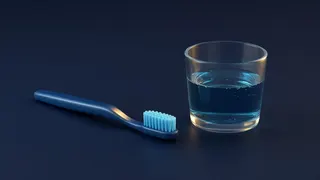
Gentle brushing twice a day with fluoride toothpaste, flossing, drinking water, fewer sugary drinks and snacks, and no tobacco.
When to call your doctor
Worrying signs — fever, bleeding, new pain, breathlessness — should be reported to your doctor between visits too. Getting in touch early is always better than waiting.
05Protecting your teeth
Steps.



06Late effects on the teeth (simplified)
| Problem | Cause | What is done |
|---|---|---|
| Short roots | Childhood treatment | X-ray, assessment before orthodontics |
| Missing teeth | Childhood treatment | Dental plan |
| Dry mouth | Radiation, chronic GVHD | Water, dentist, doctor |
| Decay | Dryness, sugar | Fluoride, regular checks |
* Your dentist and doctor decide how often you need checks.
07Key terms
- Enamel
- The hard outer layer of a tooth.
- Tooth root
- The part that holds the tooth in the jaw.
- Decay
- Tooth damage (caries).
- Salivary gland
- A gland that makes saliva.
- Fluoride
- A mineral that strengthens enamel.
- Orthodontist
- A dentist who straightens teeth.
08Key points
- Childhood treatment can affect teeth.
- See the dentist every 6 months.
- Fluoride toothpaste twice a day.
- Report a dry mouth.
- Cut down on sugary drinks.
- Tell your dentist about your treatment.
09Frequently asked questions
Can I have braces?
Often yes; the orthodontist will check the roots first.
My mouth is dry — what can I do?
Sip water and tell your doctor; suitable products exist.
Some of my child’s teeth have not come through — should I worry?
Show the dentist; a treatment plan can be made.
What should I do before a tooth extraction?
Tell the dentist; they may talk to your haematologist if needed.
Does this information replace medical advice?
No. This is general education; only your treating doctor can assess your situation.
10Questions for your doctor
Take these questions to your appointment. The ones you save are collected on the “My questions” page and stay on this device only.
Can I have braces?
My mouth is dry — what can I do?
Some of my child’s teeth have not come through — should I worry?
What should I do before a tooth extraction?
Does this information replace medical advice?
12Sources
- Children's Oncology Group. Long-Term Follow-Up Guidelines for Survivors of Childhood, Adolescent and Young Adult Cancers
- National Cancer Institute. Oral Complications of Cancer Therapies (PDQ®)
- National Institute of Dental and Craniofacial Research. Cancer Treatments and Oral Health
- National Institute of Dental and Craniofacial Research. Dry Mouth
- MedlinePlus (U.S. National Library of Medicine). Dental Health
- National Cancer Institute (NCI). Late Effects of Treatment for Childhood Cancer (PDQ®)–Patient Version
- National Cancer Institute (NCI). Follow-Up Medical Care
- National Cancer Institute (NCI). Cancer Survivorship
- Cancer.Net (ASCO). Follow-Up Care After Cancer Treatment
- Leukemia & Lymphoma Society (LLS). Long-Term and Late Effects of Treatment