Immune recovery
After treatment ends, the immune system does not recover in a day but in stages. This topic explains how long it takes, how vaccinations are restored and how to stay protected in the meantime.

01Short answer
02Simple explanation
Immune cells recover at different speeds.
Neutrophils — weeks.
Lymphocytes — months to years.
Vaccinations are restored on your doctor’s schedule.
Live vaccines — only with permission.
03Scientific explanation
Order of recovery: neutrophils and NK cells recover first, then B cells, and T cells last; after an allogeneic transplant full T-cell recovery can take 1–2 years.
Vaccines: under the IDSA 2013 guideline, inactivated vaccines are usually given from 3–6 months after transplant, and live vaccines no earlier than 24 months and only without GVHD.
After chemotherapy: the CDC notes that live vaccines are considered at least 3 months after chemotherapy ends (later after anti-B-cell medicines).
Family: when close contacts have seasonal flu and routine vaccines, it indirectly protects the patient.
04What happens in the body?
How does immunity come back?
First the front-line defence cells — neutrophils — recover, then the defence “with memory” — B and T lymphocytes.
Why does it take so long?
Lymphocytes have to be made again and “learn”. Steroids, transplant, GVHD and some medicines slow this down.

Restoring vaccinations
Treatment can weaken the protection of earlier vaccines. Your doctor sets a schedule, starting with inactivated vaccines. After a transplant, childhood vaccines are often given again.

Everyday protection
Hand hygiene, avoiding close contact with people who are ill, food safety and dental care are especially important in this period.
When are restrictions eased?
Based on blood tests, lymphocyte counts and sometimes immunoglobulin levels, your doctor gradually allows crowded places, travel, pets and gardening.
When to call your doctor
Worrying signs — fever, bleeding, new pain, breathlessness — should be reported to your doctor between visits too. Getting in touch early is always better than waiting.
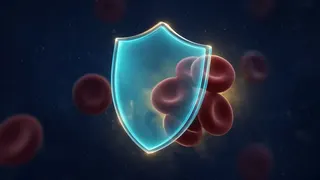
05Rebuilding defences
Steps of immune recovery.



06Recovery times (approximate, simplified)
| Cells | After chemotherapy | After allogeneic transplant |
|---|---|---|
| Neutrophils | Weeks | 2–4 weeks |
| NK cells | Weeks | 1–2 months |
| B cells | Months | 6–12 months or more |
| T cells | Months | 1–2 years or more |
* Times vary; GVHD and medicines can extend them.
07Key terms
- Neutrophil
- A front-line infection-fighting cell.
- Lymphocyte
- An immune cell “with memory” (B, T, NK).
- Immunoglobulin
- An antibody — a protein made by B cells.
- Inactivated vaccine
- A vaccine with no live germs.
- Live vaccine
- A vaccine containing a weakened live germ.
- Revaccination
- Giving vaccines again.
08Key points
- Immunity returns in stages.
- Lymphocytes take months.
- Vaccinations are restored on schedule.
- Live vaccines only with permission.
- Your family’s vaccines protect you.
- Your doctor eases restrictions.
09Frequently asked questions
Can I have a flu vaccine?
An inactivated flu vaccine is usually recommended; your doctor sets the timing. The nasal spray (live) is not suitable.
Do I need childhood vaccines again?
After a transplant often yes; after chemotherapy your doctor decides individually.
A child in my family is getting a live vaccine. Is that dangerous?
Most live vaccines are safe for family members; ask your doctor about rare exceptions.
How can I “boost” my immunity?
There are no proven “immune boosters”; sleep, food, movement and vaccines are the best support.
Does this information replace medical advice?
No. This is general education; only your treating doctor can assess your situation.
10Questions for your doctor
Take these questions to your appointment. The ones you save are collected on the “My questions” page and stay on this device only.
Can I have a flu vaccine?
Do I need childhood vaccines again?
A child in my family is getting a live vaccine. Is that dangerous?
How can I “boost” my immunity?
Does this information replace medical advice?
12Sources
- Centers for Disease Control and Prevention (CDC). Altered Immunocompetence — General Best Practice Guidelines for Immunization
- Clinical Infectious Diseases, 2014. Rubin LG et al. 2013 IDSA Clinical Practice Guideline for Vaccination of the Immunocompromised Host
- National Cancer Institute (NCI). Infection and Neutropenia during Cancer Treatment
- MedlinePlus (U.S. National Library of Medicine). Blood Differential
- MedlinePlus (U.S. National Library of Medicine). Immunization
- National Cancer Institute (NCI). Follow-Up Medical Care
- National Cancer Institute (NCI). Cancer Survivorship
- Cancer.Net (ASCO). Follow-Up Care After Cancer Treatment
- Leukemia & Lymphoma Society (LLS). Long-Term and Late Effects of Treatment
- National Cancer Institute. Facing Forward: Life After Cancer Treatment