Antibiotics
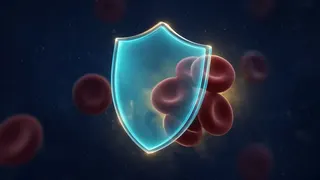
Leukemia and its treatment weaken the body’s defences against infection. Antibiotics are an integral part of care: they prevent and treat bacterial infections.

01Short answer
02Simple explanation
Why? When neutrophils are low, bacteria easily cause infection.
Fever is a signal. Sometimes it is the only sign of infection.
Start fast. The sooner an antibiotic starts, the safer.
Prevention. Sometimes a protective antibiotic is given even without infection.
03Scientific explanation
Febrile neutropenia: neutrophils <0.5×10⁹/L (or expected to fall) and a temperature of ≥38.0–38.3 °C. According to ESMO, IDSA and NICE, a broad-spectrum beta-lactam (such as piperacillin–tazobactam, cefepime or meropenem) should start within an hour; risk is assessed with the MASCC score.
Prevention: in prolonged neutropenia, fluoroquinolone prophylaxis reduces infections and, in some studies, deaths, but raises the risk of resistance — centres decide based on local data. Co-trimoxazole against pneumocystis is standard in ALL and some other regimens.
Resistance and stewardship: careful antibiotic use (antimicrobial stewardship) — narrowing the spectrum according to cultures and avoiding unnecessary length — helps prevent multidrug-resistant bacteria and C. difficile diarrhoea.
04What happens in the body?
What to do with a fever
Take your temperature; if it is 38 °C or higher, call the number your team gave you straight away. In hospital, blood tests and cultures are taken and antibiotics start. Do not take fever medicine without talking to your doctor.

Cultures
The laboratory tries to find bacteria in the blood or other samples and tests which antibiotic works against them. Results usually take 1–3 days, so a broad-spectrum antibiotic is given first.

Preventive antibiotics
During some treatment periods, an antibiotic tablet may be prescribed to prevent infection. It does not replace urgent help when you have a fever.
05Fever during neutropenia: what happens?
A simplified outline.



06How antibiotics are used in leukemia
| Purpose | Example | Note |
|---|---|---|
| Febrile neutropenia | Piperacillin–tazobactam, cefepime, meropenem | Into a vein, urgently |
| Prevention | Fluoroquinolone (levofloxacin) | In prolonged neutropenia |
| Pneumocystis prevention | Co-trimoxazole | ALL and other regimens |
| Catheter infection | Vancomycin and others | Guided by culture |
| Gut infection | C. difficile treatment | If diarrhoea occurs |
| Outpatient treatment | Antibiotics by mouth | Low risk, doctor’s decision |
* Only your doctor chooses the antibiotic and how long to take it.
07Key terms
- Neutrophil
- A white blood cell that fights bacteria.
- Neutropenia
- A shortage of neutrophils.
- Febrile neutropenia
- Fever during neutropenia — an emergency.
- Blood culture
- A test looking for bacteria in the blood.
- Broad-spectrum antibiotic
- An antibiotic that acts on many bacteria.
- Sepsis
- A life-threatening reaction of the body to infection.
08Key points
- Infection risk is high during neutropenia.
- Fever is an emergency.
- Antibiotics should start within an hour.
- Cultures refine the choice.
- Preventive antibiotics may be used.
- Do not stop the course early.
09Frequently asked questions
I have no fever but feel unwell — should I call?
Yes. Shivering, weakness or confusion can also be signs of infection.
Can I take paracetamol?
During neutropenia, do not take it before you have measured your temperature and called your team.
Can antibiotics cause diarrhoea?
Yes; tell your team if you have frequent watery stools.
Can I take antibiotics at home?
Sometimes, if the risk is low, and only by the doctor’s decision.
10Questions for your doctor
Take these questions to your appointment. The ones you save are collected on the “My questions” page and stay on this device only.
I have no fever but feel unwell — should I call?
Can I take paracetamol?
Can antibiotics cause diarrhoea?
Can I take antibiotics at home?
12Sources
- National Cancer Institute (NCI). Chemotherapy to Treat Cancer
- Cancer Research UK. Chemotherapy
- NHS. Chemotherapy
- National Cancer Institute (NCI). Infection and Neutropenia during Cancer Treatment
- American Cancer Society. Infections in People with Cancer
- NHS. Neutropenic sepsis
- MedlinePlus. Uric acid – blood
- MedlinePlus. Febuxostat
- Canadian Cancer Society. Kidney problems
- MedlinePlus. Acute kidney failure