Questions about ALL
Acute lymphoblastic leukemia (ALL) is the most common cancer in children, but it also occurs in adults.

01Short answer
02Simple explanation
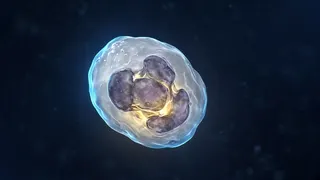
In ALL lymphoblasts fill the bone marrow.
These cells can reach the fluid around the brain and spine, so treatment covers that too.
03Scientific explanation
ALL is divided by immunophenotype (B or T) and genetics; Ph+ ALL and Ph-like ALL are separate groups.
MRD is one of the strongest outlook markers in ALL and is used to adjust how intensive treatment is.
04What happens in the body?
In children and adults
Childhood ALL has good results with modern protocols. In adults treatment is harder, but new drugs are improving results.
Why it takes so long
ALL cells can hide in “sanctuary” sites in the body. Long, phased treatment lowers the risk of relapse.

New options
Bispecific antibodies, antibody–drug conjugates and CAR-T cell therapy have opened new paths for some patients. Your doctor will say whether they suit you.

05The phases of ALL treatment
The main stops on a long road.



06Key points at a glance
| Topic | In brief |
|---|---|
 In children and adults | Childhood ALL has good results with modern protocols. In adults treatment is harder, but new drugs are improving results. |
 Why it takes so long | ALL cells can hide in “sanctuary” sites in the body. Long, phased treatment lowers the risk of relapse. |
| New options | Bispecific antibodies, antibody–drug conjugates and CAR-T cell therapy have opened new paths for some patients. Your doctor will say whether they suit you. |
07Key terms
- Lymphoblast
- An immature cell of the lymphoid line.
- Ph+
- ALL with the Philadelphia chromosome.
- Maintenance therapy
- Long-term treatment to keep remission.
08Key points
- ALL is an acute leukemia of the lymphoid line.
- Treatment is long and phased.
- CNS protection is part of the plan.
- MRD is a key marker.
09Frequently asked questions
Why is a lumbar puncture needed?
To check the spinal fluid and to give medicine there.
Are children’s protocols used in adults?
Young adults sometimes have child-style protocols; the doctor decides.
Who is CAR-T for?
Usually relapsed or resistant B-ALL; the team will explain the criteria.
10Questions for your doctor
Take these questions to your appointment. The ones you save are collected on the “My questions” page and stay on this device only.
Why is a lumbar puncture needed?
Are children’s protocols used in adults?
Who is CAR-T for?
12Sources
- National Cancer Institute (NCI). Adult Acute Lymphoblastic Leukemia Treatment (PDQ®) – Patient Version
- NHS. Acute lymphoblastic leukaemia
- MedlinePlus (U.S. National Library of Medicine). Leukemia
- National Cancer Institute (NCI). CAR T Cells: Engineering Patients’ Immune Cells to Treat Their Cancers
- National Cancer Institute (NCI). Stem Cell and Bone Marrow Transplants for Cancer
- NHS. High temperature (fever) in adults
- NHS. How to wash your hands
- Cancer Research UK. Coping emotionally with cancer
- National Cancer Institute (NCI). When Someone You Love Is Being Treated for Cancer (booklet)
- National Cancer Institute (NCI). Managing Your Care