Raw and cooked: when to cook during treatment
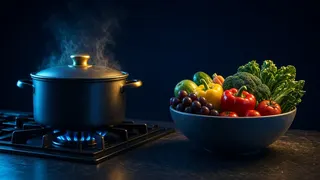
People say raw vegetables are healthier. But during neutropenia raw food can be a source of infection. This section explains the difference between raw and cooked, when cooking is safer and how to keep vitamins.

01Short answer
02Simple explanation
Cooking kills germs.
During neutropenia: cooked.
Steaming keeps vitamins.
Meat and eggs: always fully cooked.
03Scientific explanation
Vitamins: vitamin C is lost with heat and water; lycopene and beta-carotene are absorbed better from cooked food.
Neutropenic diet: studies have not clearly shown that a strict "neutropenic diet" reduces infections; many centres now focus on food-safety rules, so follow your team’s guidance.
WHO: at least 400 g of fruit and vegetables a day is recommended; during treatment the amount may vary with appetite and your doctor’s advice.
FDA: wash produce under running water before cutting or peeling, because a knife can carry germs from the skin into the flesh.
04What happens in the body?
How to cook
Steaming, short boiling and baking. Use the cooking water in soup, where the vitamins stay.

Storing cooked food
Cool cooked food within 2 hours, refrigerate it and eat it within 1–2 days.

Washing and peeling
Wash your hands, rub the fruit under running water, dry it with a clean towel, then peel or cut it. Soap or bleach solutions are not needed.
Cut fruit
Keep cut fruit in the fridge and eat it within 1 day; do not leave it at room temperature for more than 2 hours.
05Fruit: four steps
Whole fruit, swap bruised, wash and peel, eat cut fruit soon.





06Key points at a glance
| Topic | In brief |
|---|---|
 How to cook | Steaming, short boiling and baking. Use the cooking water in soup, where the vitamins stay. |
 Storing cooked food | Cool cooked food within 2 hours, refrigerate it and eat it within 1–2 days. |
| Washing and peeling | Wash your hands, rub the fruit under running water, dry it with a clean towel, then peel or cut it. Soap or bleach solutions are not needed. |
 Cut fruit | Keep cut fruit in the fridge and eat it within 1 day; do not leave it at room temperature for more than 2 hours. |
07Key terms
- Neutropenic diet
- Rules limiting raw food during neutropenia.
- Steaming
- Cooking without food touching the water.
- Neutropenia
- Low neutrophils, raising infection risk.
- Potassium
- A mineral for the heart and muscles.
- Fibre
- The part of plants that helps the gut work.
08Key points
- Cooked during neutropenia.
- Steam your vegetables.
- Cool cooked food quickly.
- Wash under running water.
- Eat cut fruit soon.
09Frequently asked questions
Do cooked vegetables keep their vitamins?
Yes; some decrease and others are absorbed better.
When can I eat salad again?
When your neutrophils recover; your team will tell you.
Does this fruit treat leukemia?
No. It is a pleasant part of eating, not a treatment.
10Questions for your doctor
Take these questions to your appointment. The ones you save are collected on the “My questions” page and stay on this device only.
Do cooked vegetables keep their vitamins?
When can I eat salad again?
Does this fruit treat leukemia?
12Sources
- Leukemia & Lymphoma Society. Diet Guidelines for Immunosuppressed Patients
- U.S. FDA. Selecting and Serving Produce Safely
- NHS. 5 A Day: what counts?
- National Cancer Institute. Eating Hints: Before, During, and After Cancer Treatment
- USDA. FoodData Central
- Food Standards Agency (UK). Cooking your food
- NHS inform. Preparing and cooking food safely
- World Health Organization (WHO). Salmonella (non-typhoidal) — fact sheet
- U.S. Food and Drug Administration (FDA). Selecting and Serving Fresh and Frozen Seafood Safely
- NHS. Fish and shellfish