Tea and medicines: when caution is needed
Tea is an everyday drink and medicines are the basis of treatment. Sometimes they affect each other. This section covers the main interactions and simple rules.

01Short answer
02Simple explanation
Take tablets with water.
Green tea may affect bortezomib.
Tea reduces iron absorption.
Tell your pharmacist everything.
03Scientific explanation
MSK: EGCG binds bortezomib and reduced its effect in lab studies; patients on this drug are advised to avoid green tea products.
Iron: tea tannins can reduce absorption of plant iron and iron tablets; leave 1–2 hours between them.
NCI: it has not been shown in people that tea prevents or treats cancer.
MedlinePlus: about 400 mg of caffeine a day is generally considered safe for adults; during treatment watch your sleep and heart rate.
04What happens in the body?
How to take tablets
With a glass of water; unless your doctor says otherwise, not with tea, juice or milk.

Your list
Add teas, herbal infusions and supplements to your medicine list and show it at every visit.

Safe brewing
Freshly boiled water, a clean teapot and a fresh brew. During neutropenia avoid cold tea that has stood for hours.
Iron and medicines
Drink tea about an hour after meals; do not take extract capsules without your doctor.
05Brewing: four steps
Sealed pack, fresh brew, right temperature, drink hot.





06Key points at a glance
| Topic | In brief |
|---|---|
 How to take tablets | With a glass of water; unless your doctor says otherwise, not with tea, juice or milk. |
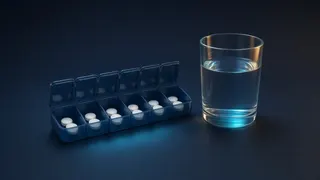 Your list | Add teas, herbal infusions and supplements to your medicine list and show it at every visit. |
| Safe brewing | Freshly boiled water, a clean teapot and a fresh brew. During neutropenia avoid cold tea that has stood for hours. |
 Iron and medicines | Drink tea about an hour after meals; do not take extract capsules without your doctor. |
07Key terms
- Interaction
- When one substance changes the effect of another.
- Bortezomib
- A medicine used for blood cancers.
- Caffeine
- A stimulant.
- Polyphenols
- Antioxidant plant compounds.
- Neutropenia
- Low neutrophils.
08Key points
- Tablets with water.
- Green tea and bortezomib: caution.
- Iron 1–2 hours apart.
- Brew with boiled water.
- Capsules only with your doctor.
09Frequently asked questions
Which medicines don’t mix with tea?
It depends on your medicine; check your list with a pharmacist.
Does black tea interact?
Mainly with iron absorption and through caffeine; ordinary amounts are usually fine.
Does this tea treat leukemia?
No. Tea is a pleasant drink, not a treatment.
10Questions for your doctor
Take these questions to your appointment. The ones you save are collected on the “My questions” page and stay on this device only.
Which medicines don’t mix with tea?
Does black tea interact?
Does this tea treat leukemia?
12Sources
- National Center for Complementary and Integrative Health (NIH). Green Tea
- Memorial Sloan Kettering Cancer Center — About Herbs. Green Tea
- MedlinePlus. Caffeine
- Leukemia & Lymphoma Society. Diet Guidelines for Immunosuppressed Patients
- National Cancer Institute. Diet and Cancer Risk
- IDDSI. Framework
- FDA. Refrigerator Thermometers
- National Cancer Institute (NCI). Complementary and Alternative Medicine (CAM)
- World Health Organization (WHO). Five keys to safer food manual
- National Cancer Institute (NCI). Oral Complications of Chemotherapy and Head/Neck Radiation (PDQ®) – Patient Version