Antifungal medicines
During prolonged neutropenia, fungal infections — especially moulds — can be severe. Antifungal medicines prevent and treat them.

01Short answer
02Simple explanation
Fungi are everywhere. Usually immunity keeps them in check.
Weak defences. In long neutropenia a fungal infection can be dangerous.
Protection. At high risk a preventive medicine is given.
Treatment. If suspected, special tests and strong medicines are used.
03Scientific explanation
Prophylaxis: during AML/MDS induction and in GVHD after transplant, posaconazole reduces invasive mould infections (IDSA, ECIL, NCCN guidance); fluconazole covers Candida only.
Mechanism: azoles block ergosterol synthesis in the fungal membrane (CYP51); amphotericin B binds ergosterol and forms pores; echinocandins (caspofungin, micafungin, anidulafungin) stop β-glucan synthesis in the cell wall.
Interactions and monitoring: azoles inhibit CYP3A4, so doses of venetoclax, vinca alkaloids and some TKIs are adjusted or the drug is changed; for voriconazole and posaconazole, blood levels (TDM), liver tests and the QT interval on ECG are monitored.
04What happens in the body?
Why prevention?
A mould infection gives few signs early on but can spread quickly. So in the highest-risk period — long neutropenia or after transplant — giving a medicine in advance is safer.
How do they work?
A fungal cell has a special wall and membrane that human cells lack. Antifungals target exactly these parts, weakening or killing the fungus.

How is it found?
If a lasting fever does not respond to antibiotics, the doctor may check fungal markers in the blood, order a chest CT and sometimes a bronchoscopy.

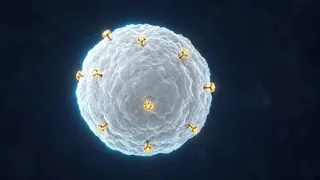
05Protecting against fungi
A simplified outline.




06Antifungal medicines in leukemia
| Group | Examples | Main use |
|---|---|---|
| Azoles | Fluconazole | Preventing Candida |
| Azoles | Posaconazole | Preventing mould infection |
| Azoles | Voriconazole, isavuconazole | Treating aspergillosis |
| Polyenes | Lipid amphotericin B | Severe infection, mucormycosis |
| Echinocandins | Caspofungin, micafungin | Candida bloodstream infection, empirical therapy |
* The protocol and your doctor decide the medicine, form and duration.
07Key terms
- Antifungal
- A medicine against fungi.
- Aspergillosis
- Infection caused by the mould Aspergillus.
- Candidiasis
- Infection with the yeast Candida.
- Galactomannan
- A marker of Aspergillus found in the blood.
- Azoles
- A drug group that blocks ergosterol synthesis.
- TDM
- Measuring a drug’s level in the blood.
08Key points
- Fungal infection is dangerous in long neutropenia.
- Preventive medicine is given at high risk.
- Azoles interact with many medicines.
- Drug levels and the liver are monitored.
- If suspected, CT and blood tests are done.
- At home, keep away from mould sources.
09Frequently asked questions
How should I take posaconazole?
Your doctor and pharmacist explain how to take it (for example, with food); follow the instructions.
Can my vision change on voriconazole?
Brief visual changes and sun sensitivity sometimes occur; protect yourself from the sun and tell your doctor.
How do I protect myself from fungi at home?
Avoid soil, compost, building dust and mouldy places; your team will give exact advice.
How long does prevention last?
Usually until recovery from neutropenia or until immunity is strong enough — your doctor decides.
10Questions for your doctor
Take these questions to your appointment. The ones you save are collected on the “My questions” page and stay on this device only.
How should I take posaconazole?
Can my vision change on voriconazole?
How do I protect myself from fungi at home?
How long does prevention last?
12Sources
- National Cancer Institute (NCI). Chemotherapy to Treat Cancer
- Cancer Research UK. Chemotherapy
- National Cancer Institute (NCI). Infection and Neutropenia during Cancer Treatment
- MedlinePlus. Posaconazole
- MedlinePlus. Voriconazole
- NHS. Aspergillosis
- MedlinePlus. Aspartate aminotransferase (AST) blood test
- Canadian Cancer Society. Heart problems
- MedlinePlus. Electrocardiogram
- European Society of Cardiology (ESC). 2022 ESC Guidelines on cardio-oncology